Looking while lunching

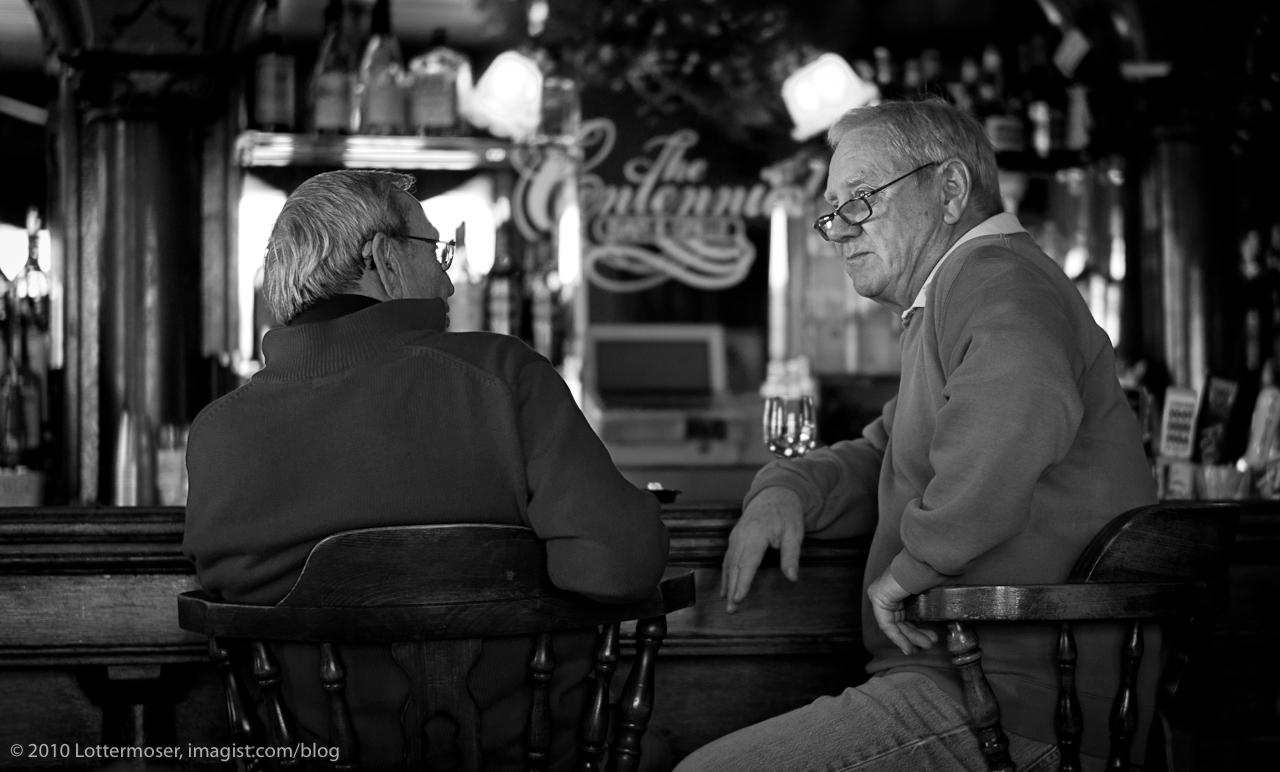
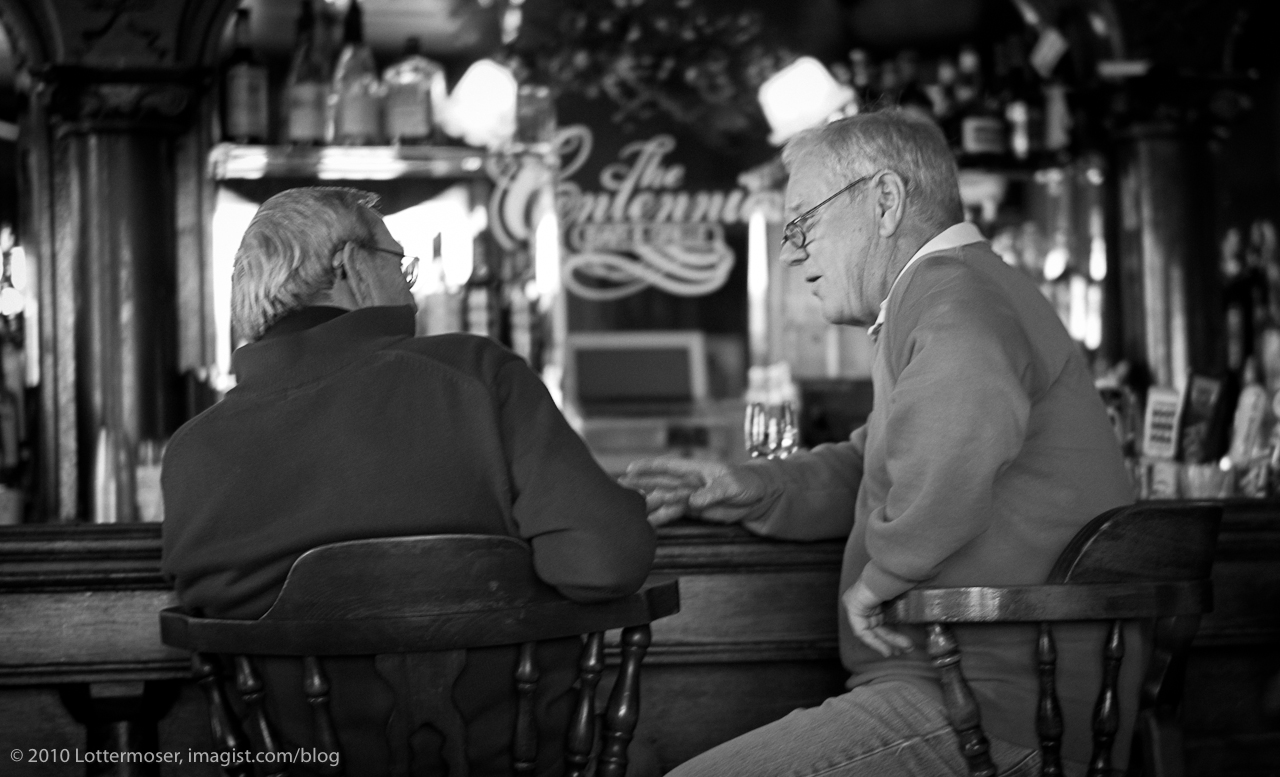
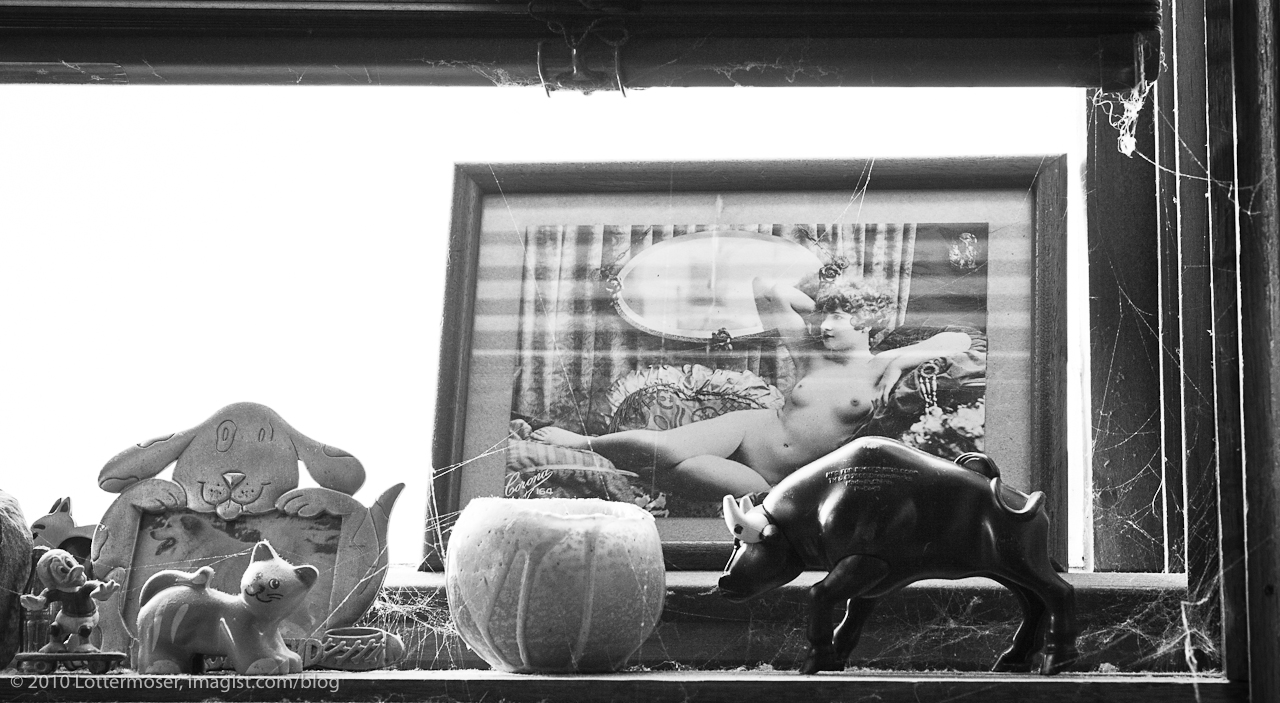
For over fifty years I’ve felt a fascination about how life “looks” in photographs. No famous people here. I don’t even know these people. No special effects. Though there does seem to be something special about black and white photographs. No news. Just everyday life in a local restaurant. Sort of silly. Really. Yet visual slices out of time and space continue to fascinate me. Why? In these three examples it’s very much about the hands (among other things).

(click photographs for larger view)

Leica M8, 50 mm Summilux Asph

Carry water (maybe start chopping wood)

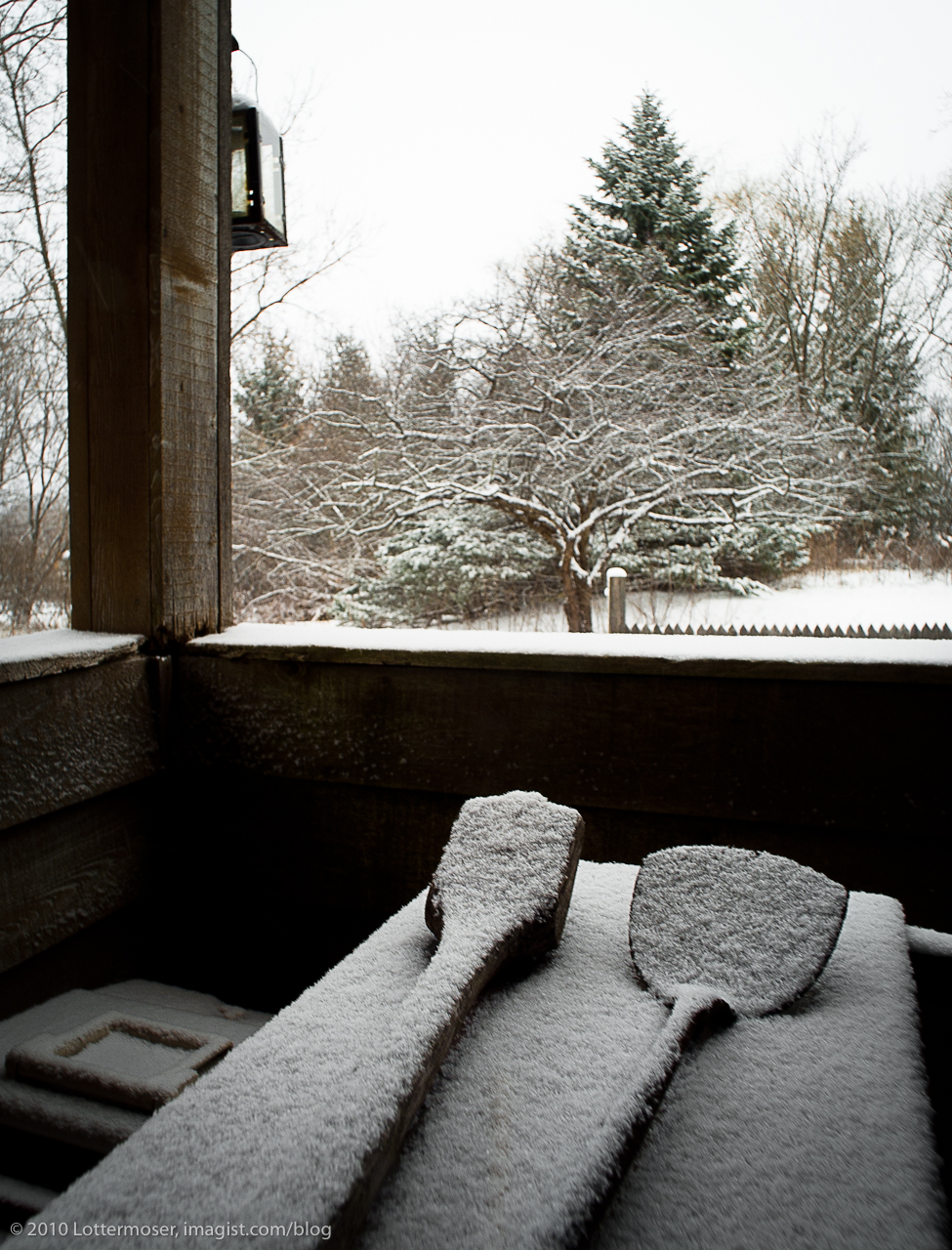
For most of my life in Wisconsin our drinking water flowed out of the taps at everyone’s house. If we were out and about, as children, we drank from, what we called, bubblers (and the rest of the country referred to them as water fountains) found nearly everywhere. Of course we also enjoyed heading into the woods with our canteens; or attaching water bottles to our 10 speed bicycles; but we filled them from the taps or bubblers. Sure we’d buy distilled water; or sparkling water; but we didn’t “buy” drinking water. Drinking water “was free” in these parts. These days everyone seems to buy and carry their drinking water. This time of year it’ll freeze pretty quick on the porch. Was a time when I also chopped a lot of wood. And during the last week I’ve reconsidered pulling the old wood stove back into service in the old house.

(click photograph for larger view)

Leica M8, 50 mm Summilux Asph

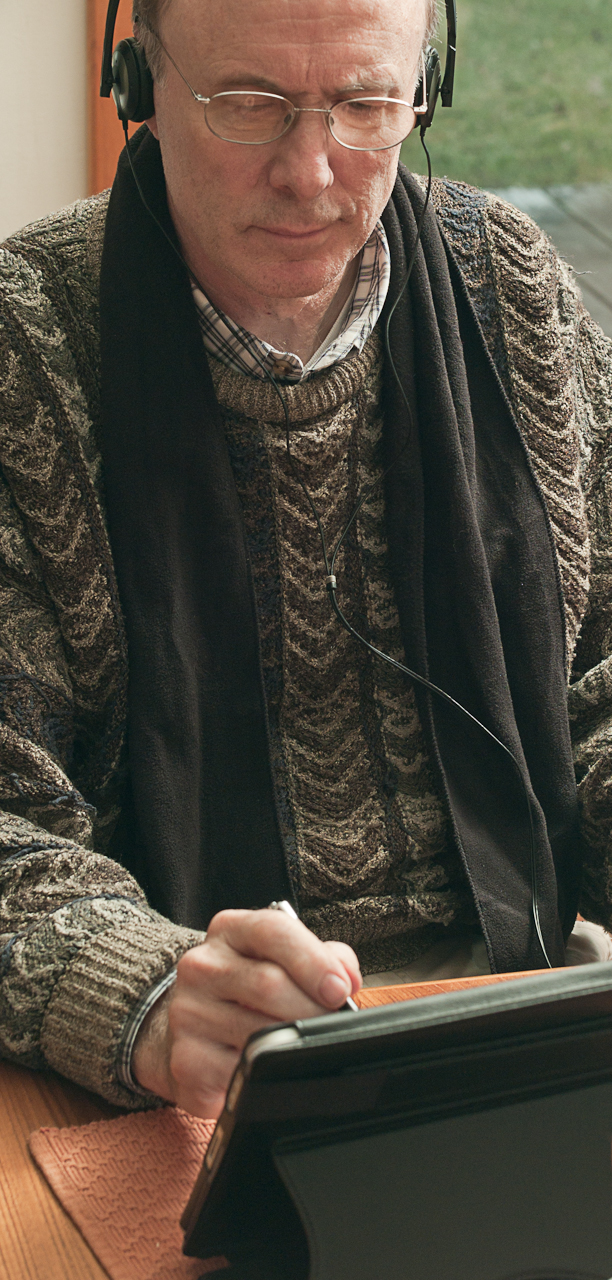
iPad as artPad

For the artist, as well as the photographer, technology has most certainly evolved. I purchased Adobe Illustrator 88 (in that year), for something close to $500, to do design work on my $3,500 Mac SE. And of course also had to have Photoshop soon after. In 1990 Fractal Painter came along for another few hundred dollars. As the years went on the computers kept getting bigger and faster; and each iteration cost another $3 – $3,500; plus continuous software, memory and harddrive upgrades. The “serious” digital artist also needs calibrated monitors for accurate prepress work; and a Wacom tablet, starting at around $300, to most closely approximate the “feel” of traditional art materials. The 12″ Wacom Cintiq, which incorporates an LCD screen into the tablet will run $1,000; with the 21″ version running a cool $2K. And all this pretty much needs to be tied down to the desk.

Today I can grab a $500 iPad and any one of  a number of  $5 (ArtStudio) to $8 (Brushes or SketchBook Pro) apps and have an experience “similar” to using a $1K tablet on a $3.5K computer while sitting in a coffee shop, on a plane or in a train. The accuracy of the finger (or stylus) will not equal that of a Wacom pen… but… hey it’s a sketch pad.

(click images for larger view)
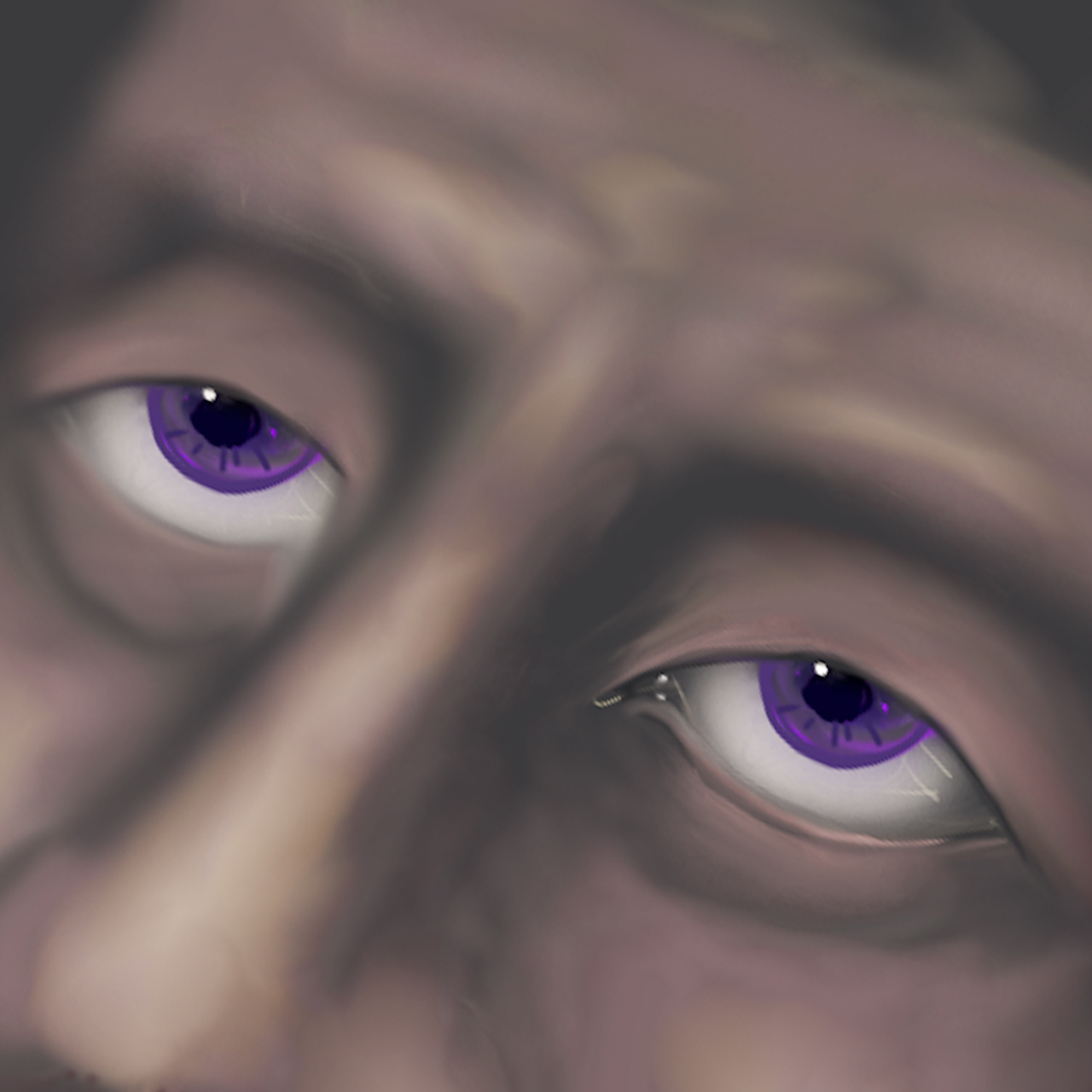
figuring — iPad “painting” by Lottermoser

And of course one can bring photos into the apps for “artistic” effects as well.
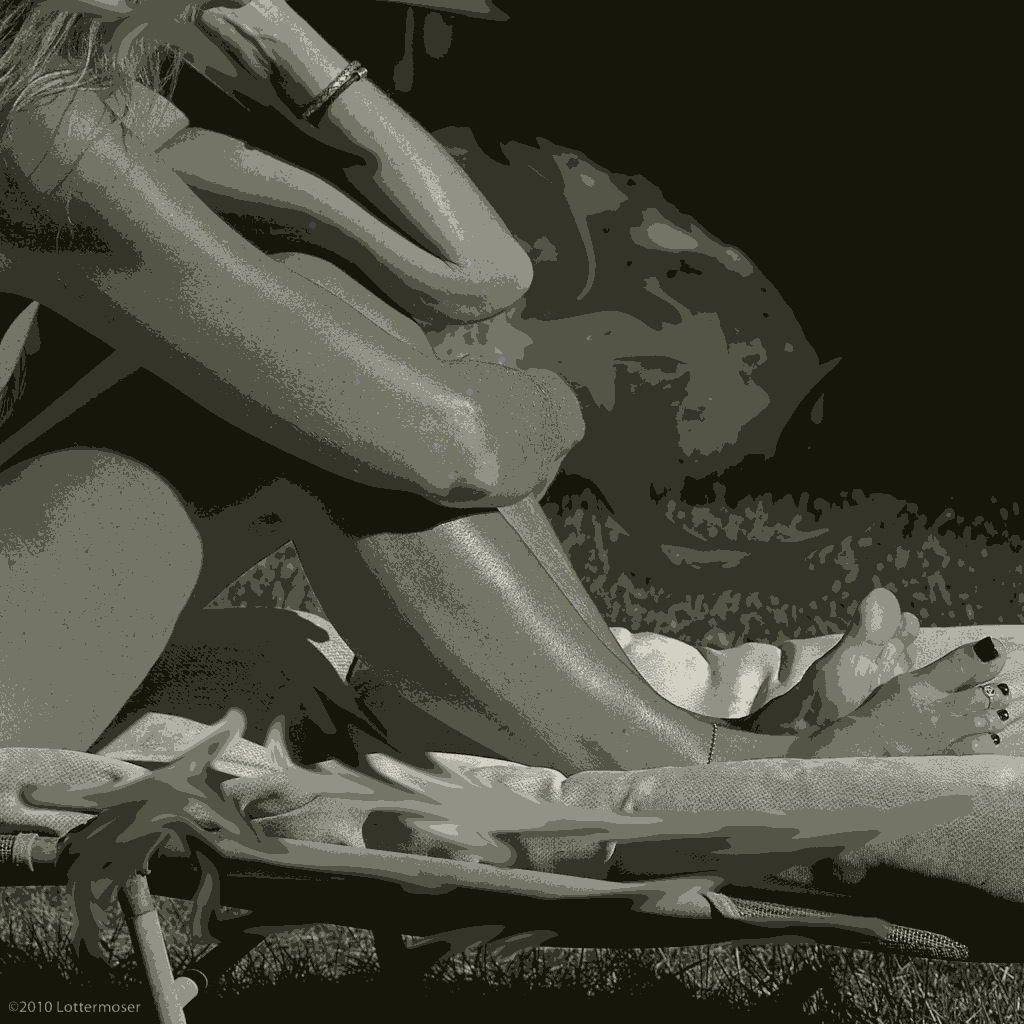
ann — iPad photo manipulation by Lottermoser

At this time the iPad artwork is limited in pixel dimensions. Yet it offers the artist a very portable, clean and useful set of tools whether a figurative, representational, or abstract expressionist. David Hockney recently exhibited a series of  work done on his iPhone and iPad using the Brushes app.
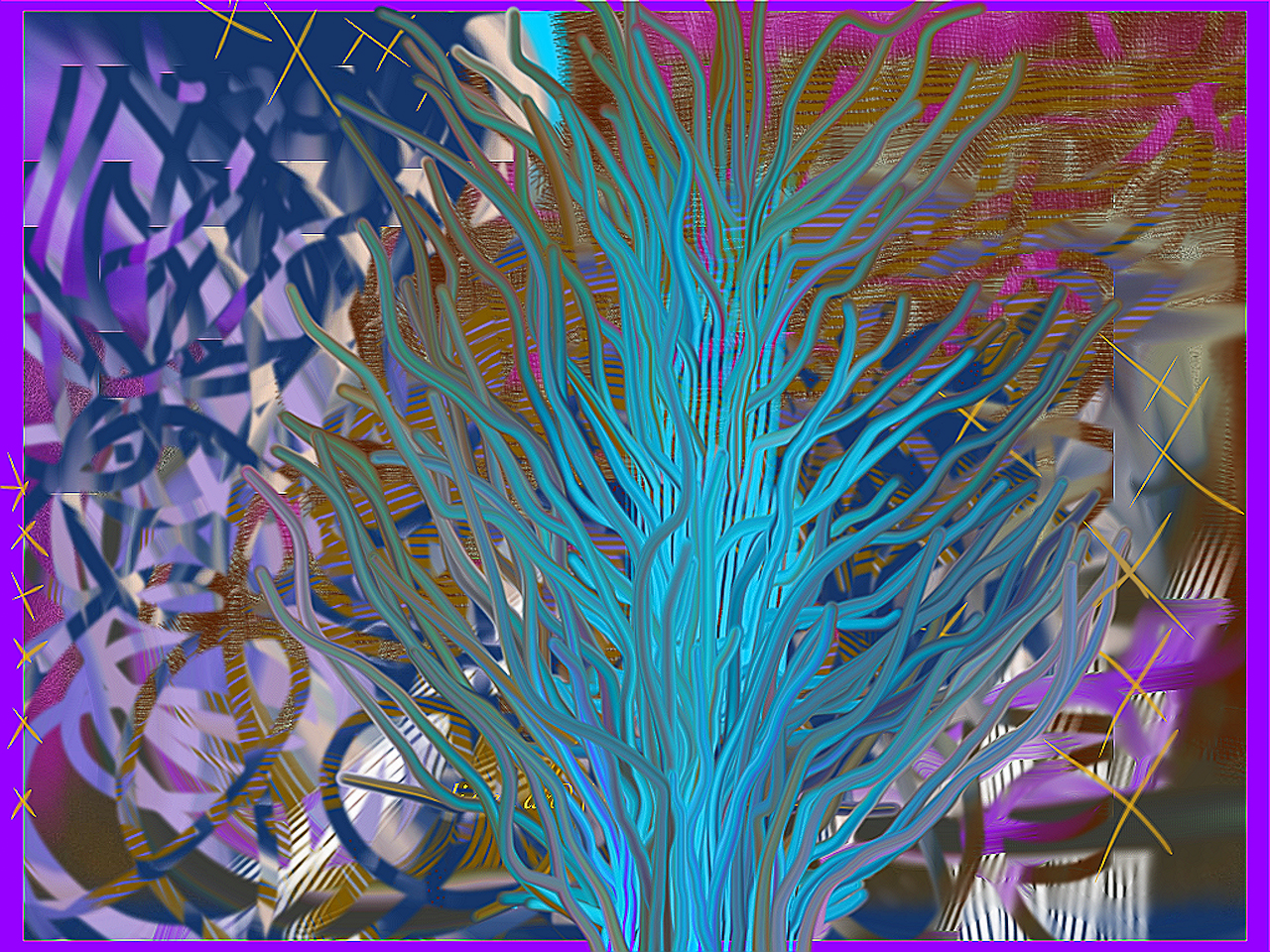
growing during chaos — iPad “painting” by Lottermoser
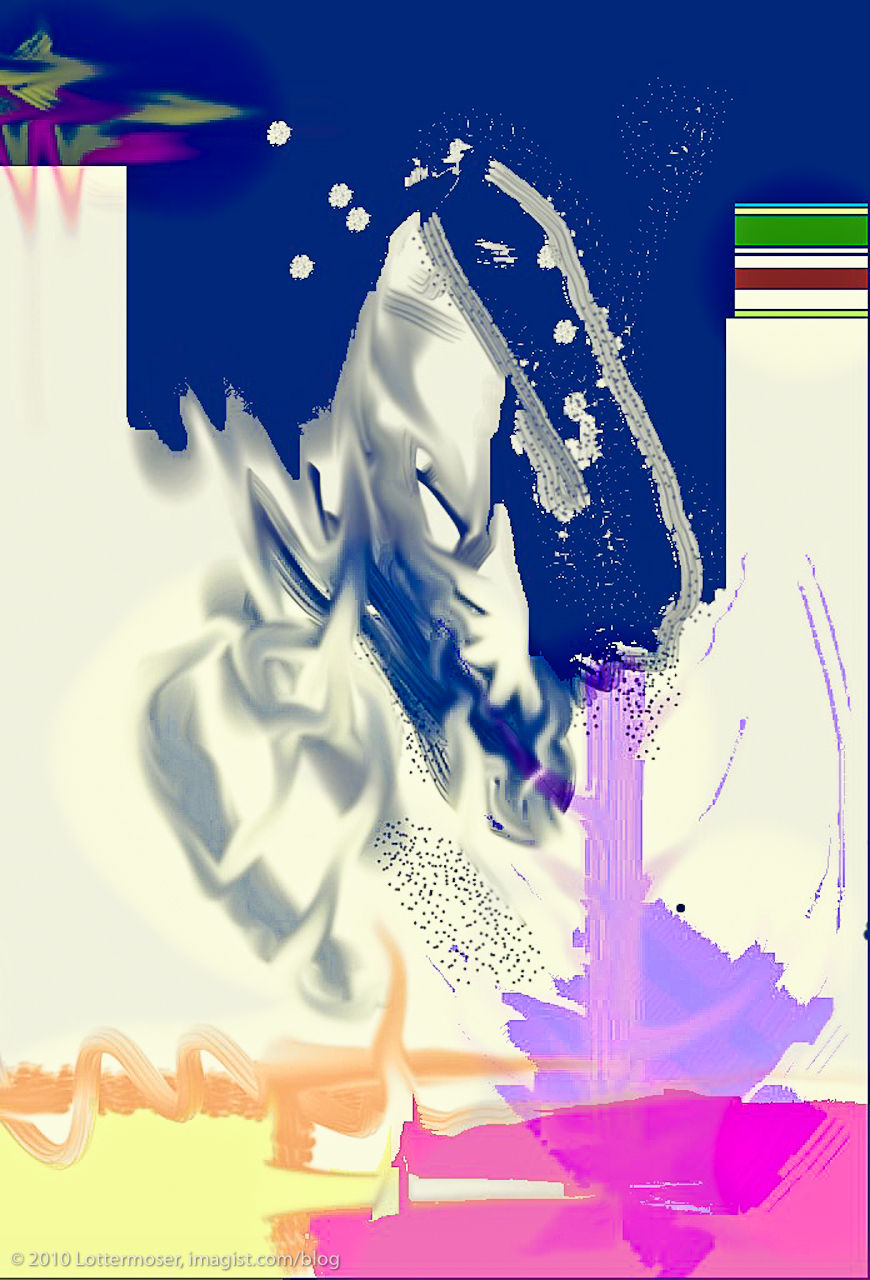
first out — iPad “painting” by Lottermoser

My friend, and painter, Jack Hernon, recently visited. I plugged in the headphones and set him loose in ArtStudio. We certainly agreed that the iPad would be a great companion on his flight home to Winston-Salem, NC.

Leica M8, 50 mm Summilux Asph
Wabi-sabi Wednesday (continued)

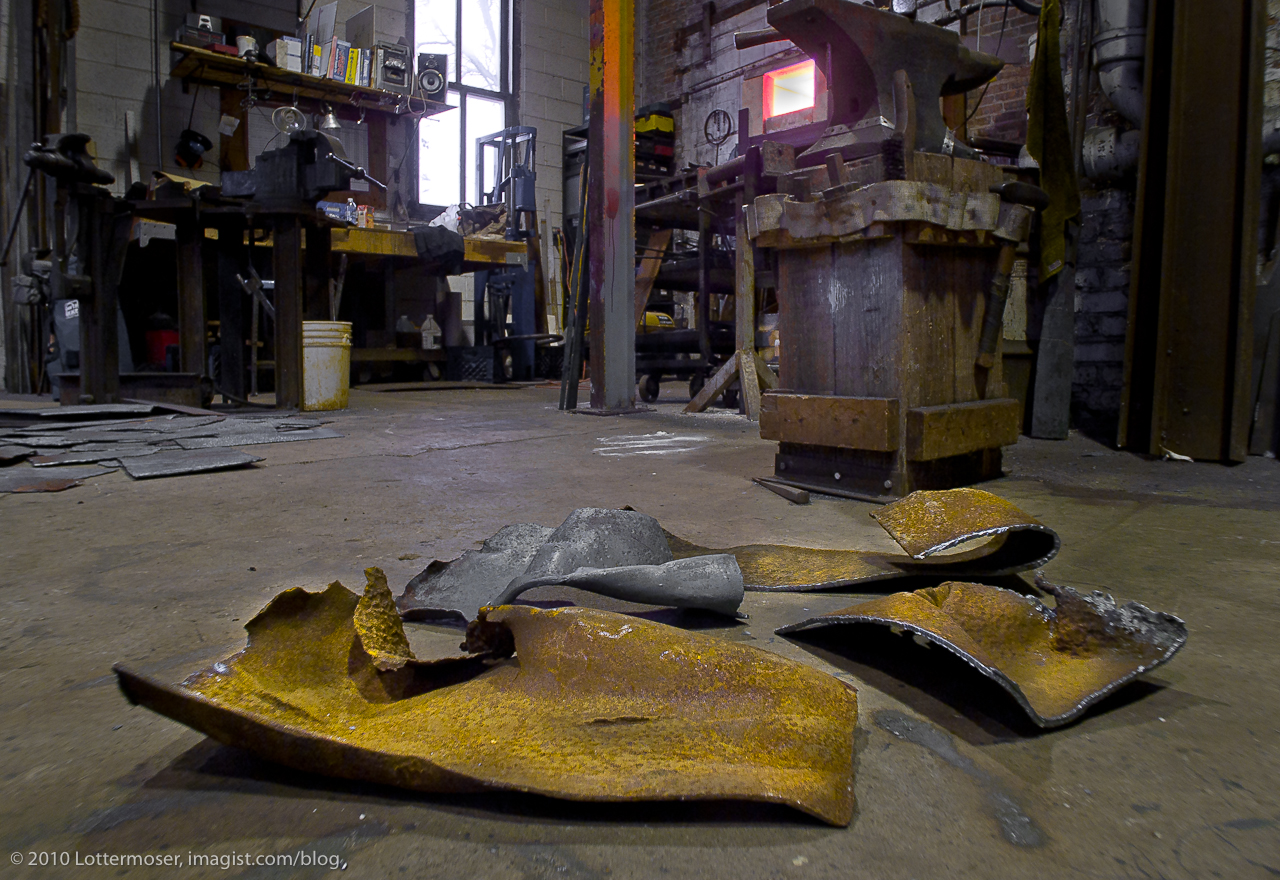
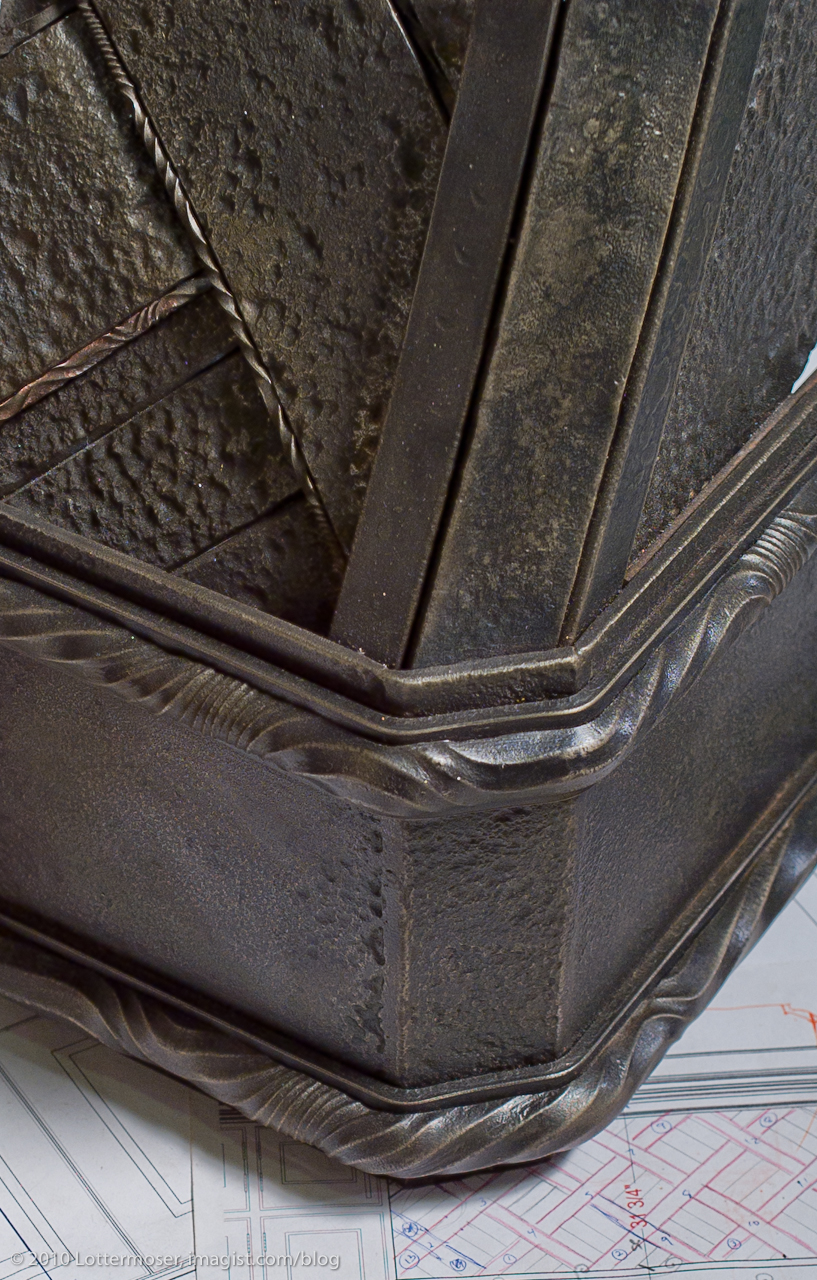
Consider this: Men mine iron ore; smelt it; turn it into steel; form the steel into sheets; transform the sheets into heavy equipment. At each stage labor and resources add value to the ore. People then use the heavy equipment to transform the earth; plant and harvest food; process that food; transport that food to super markets where we pick it up and drive it back to our kitchens in our steel vehicles. When the heavy equipment is used up and no longer functions as intended it goes to the scrap yard; where men cut it up and smash it into manageable chunks. This steel, now reduced to $100 per ton raw material (or $.10 – .20 per lb in small quantities) had a full life. It sits in the yards for decades; oxidizing, pitting and developing altogether new properties. The steel waits. Last week’s wabi-sabi wednesday photograph was just that — scrap steel in the yard of  Tyler Studios, ltd; waiting.

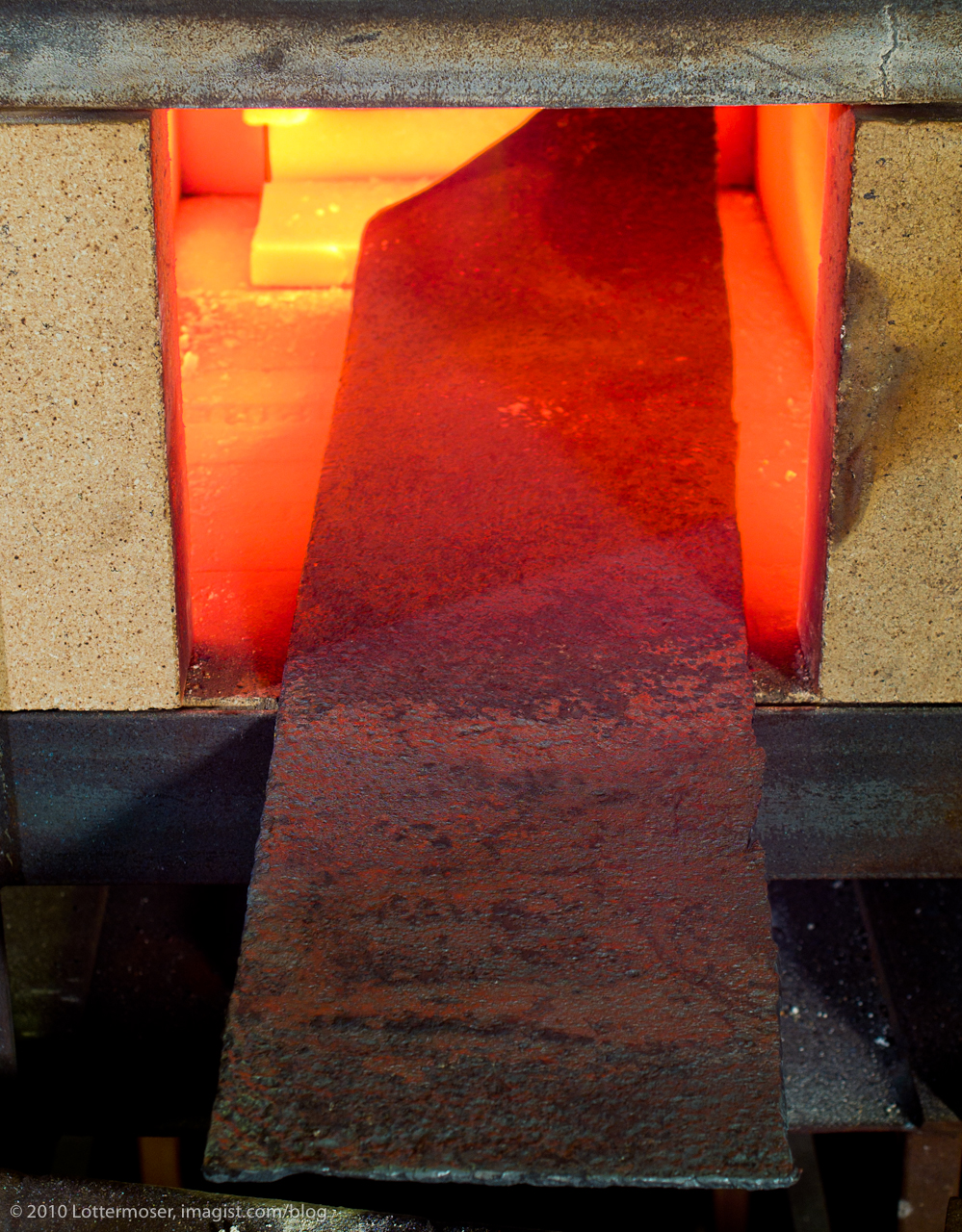
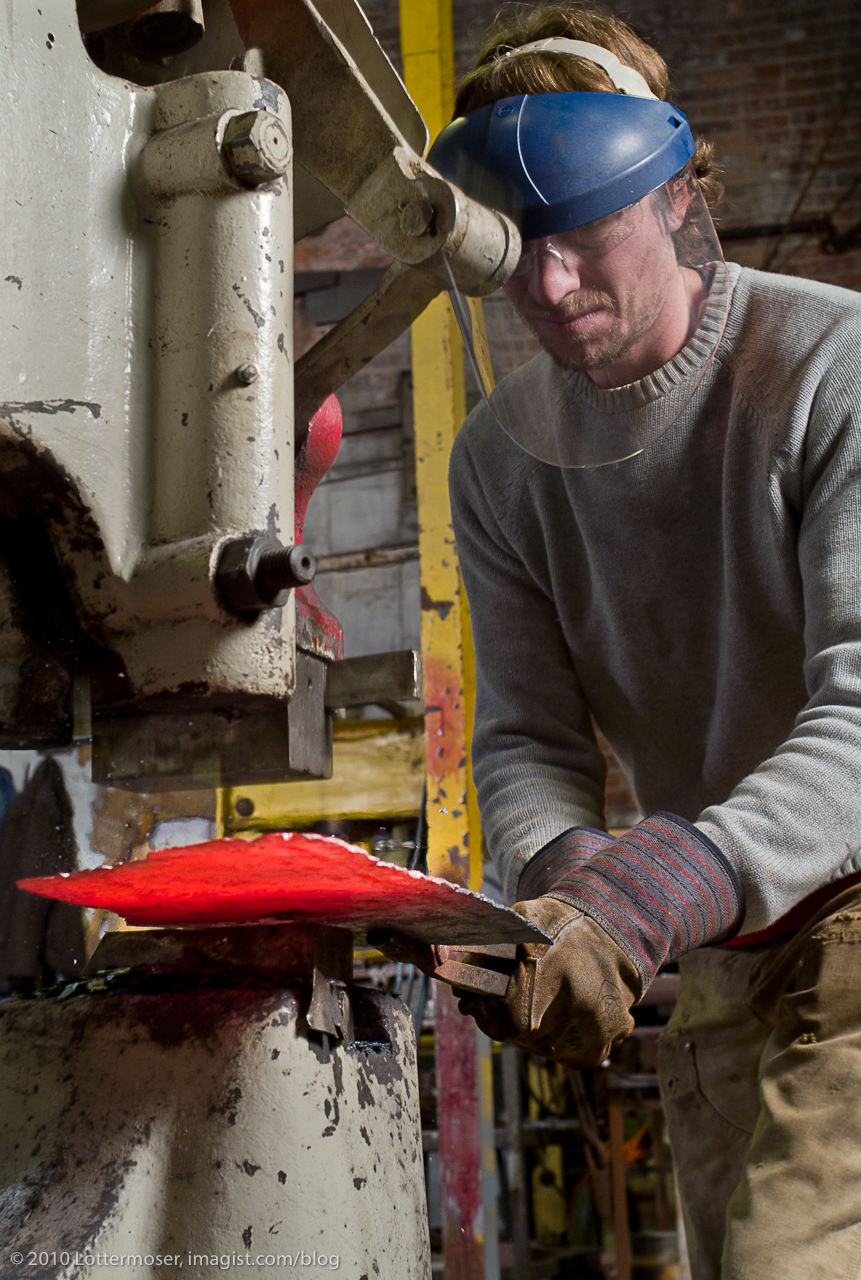
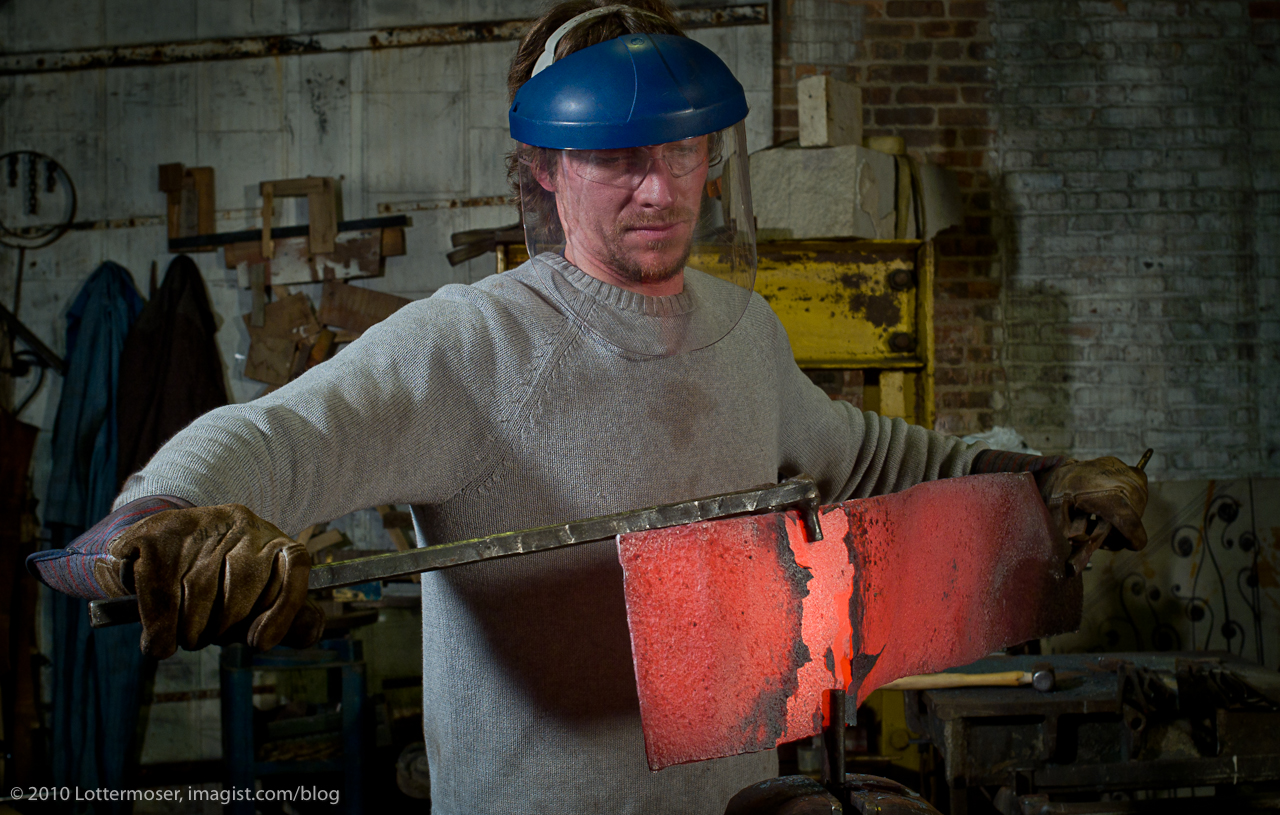
In the hands of a creative talent this scrap becomes raw material to create a beautiful “new” object.

(click photographs for larger view)

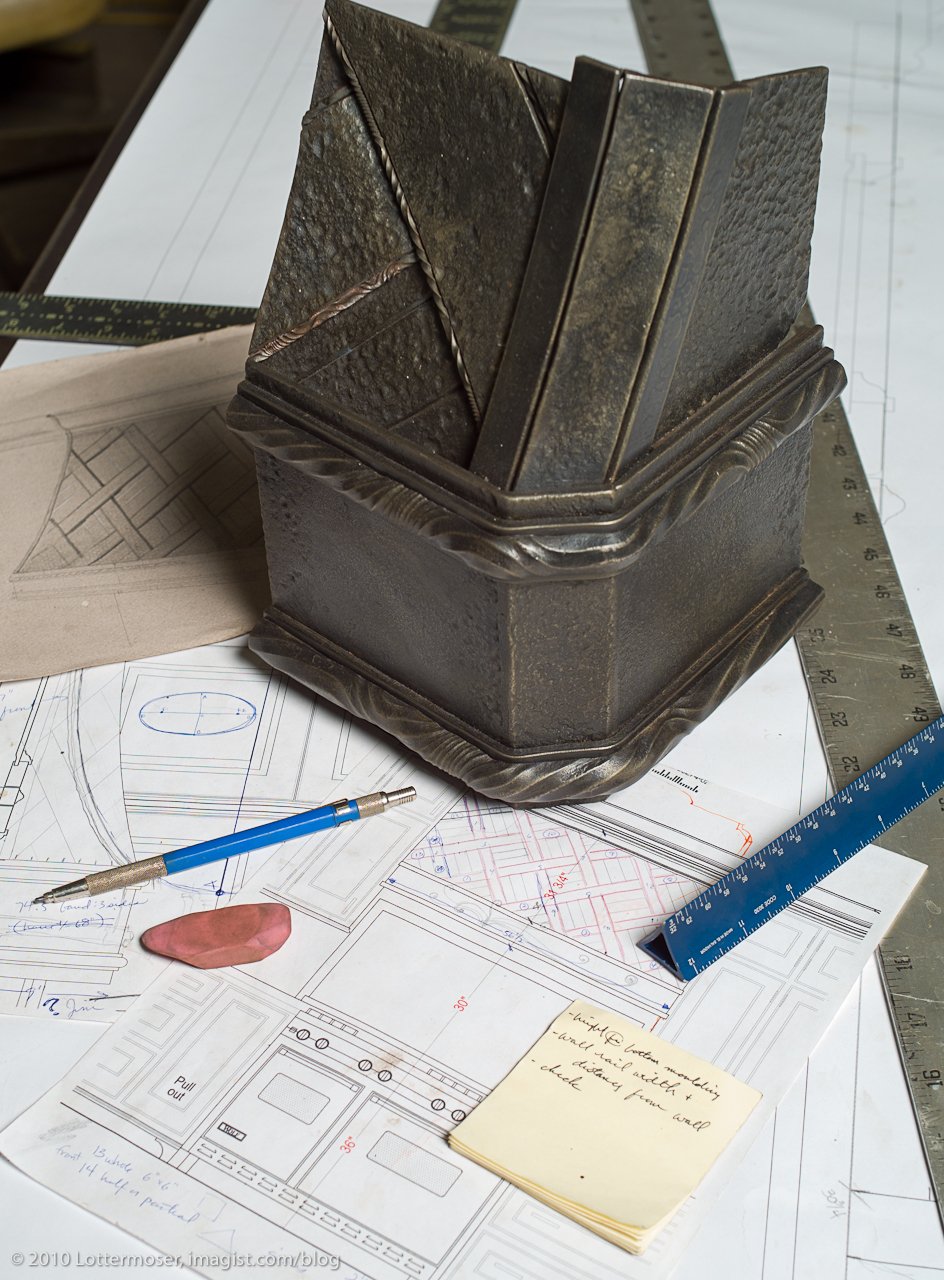
With each heat and hammer blow the craftsman adds new value to the old material. Additional photographs of this process can be found here.

The artist, Seth Tyler, has drawn the plans and made the prototype model as the first steps toward creating the full scale range hood.

Within a few months the completed range hood will hang in a fine kitchen. It will absorb the cooking aromas, heat, laughter, anger and tears of the family cooking and dining there. From morning coffee to celebrations it will continue to evolve with an ever changing patina; unique to its new environment; full of  wabi-sabi to be sure.

Leica R8, 35 mm Summilux (15 mm Super Elmar)

What do people, places and things look like – photographed?

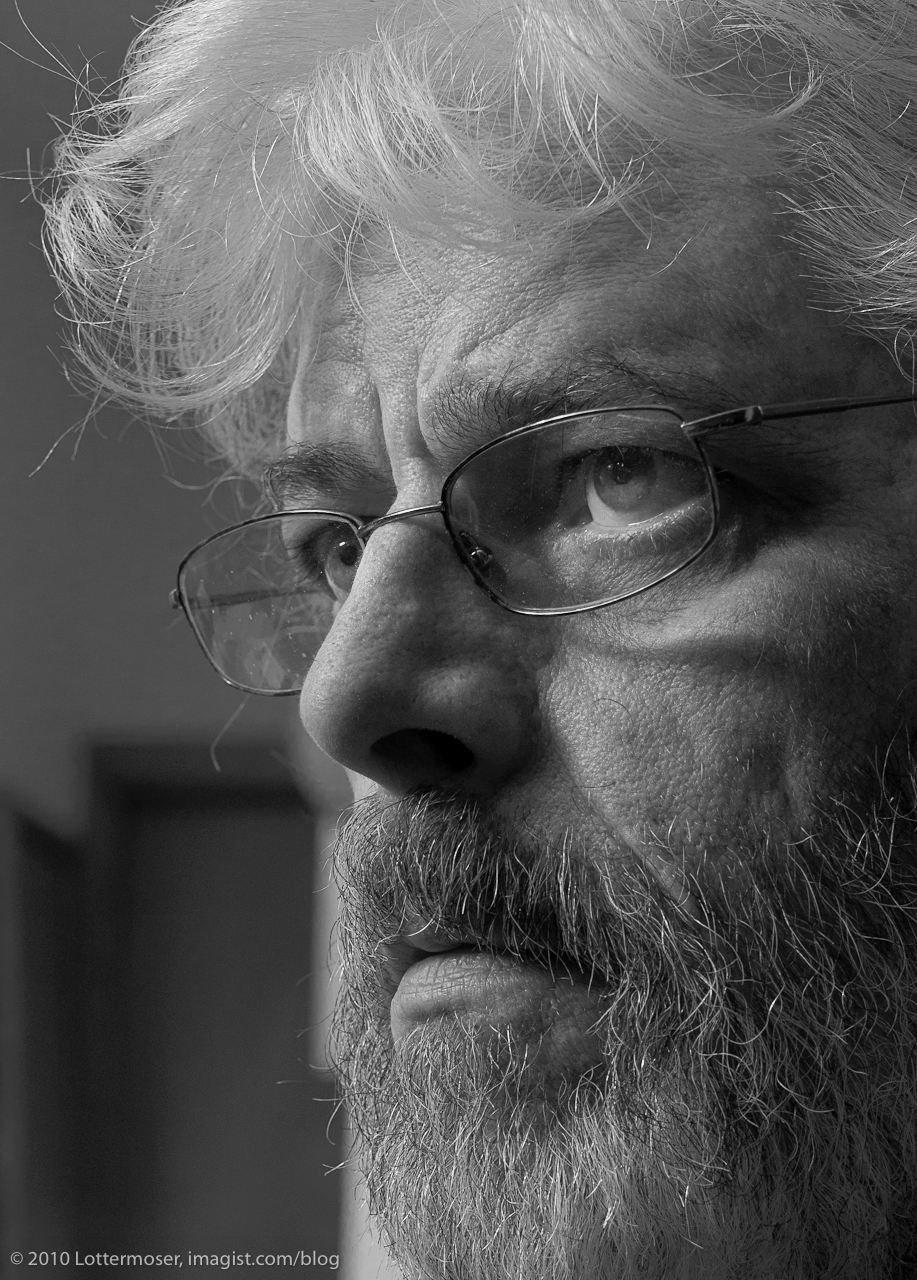
I’m always amazed when people look at photographs of themselves and say things like, “I look old and fat…” or “I look awful…” I look at the same photograph and think, “I’ve managed to capture your beauty.” It makes me wonder what they see in the mirror. Garry Winogrand said, “I photograph to find out what something will look like photographed.” It would seem that many people do not want to know what they “look like.” Every now and again, mostly while checking the light for some other photograph, I too wonder what I look like photographed.

(click photograph for larger view)

Leica M8, 50 mm Summilux Asph