brings with it
a moodiness to the contemplatives
(click photograph for larger view)

Hasselblad 500 CM / CF39, 135 mm S Planar on Auto Bellows
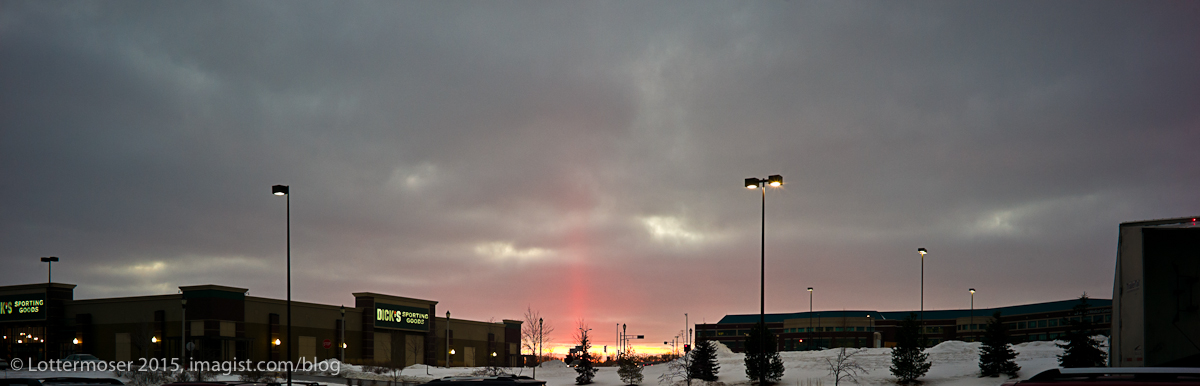
Leica M, 28 mm Summicron Asph
brings with it
a moodiness to the contemplatives
(click photograph for larger view)
Hasselblad 500 CM / CF39, 135 mm S Planar on Auto Bellows
Leica M, 28 mm Summicron Asph
(click photograph for larger view)

Hasselblad 500cm/CF-39, 135 mm S Planar on Auto Bellows

(click photograph for larger view)


Leica M, 50 mm Summilux Asph with extension tube
both
the joy of blooming…
and the lesson of transitioning
through the seasons
(click photographs for larger view)



Leica M, 28 mm Summicron Asph (with extension tube)
We photograph to explore our fascination with reality and all its remarkable, fleeting moments. …because we love light. …to discover how the moment may look when frozen in time. We photograph to remember. To tell a story. To illustrate. To explain. To say, “Look what I saw.” To learn more about “this or that.” To share. To show—as proof. We’re fascinated by, and need to explore, visual compositions as a means of self expression. …music for the eyes …visual poems.
We use black and white when we feel a need to express our love for lines, textures, patterns, shapes, and forms drawn by shadows and highlights. …when our vision demands a rich tonality.…when color would only serve as a distraction. The same reasons we draw with graphite, silver point, charcoal, conté and inks.
(click photograph for larger view)
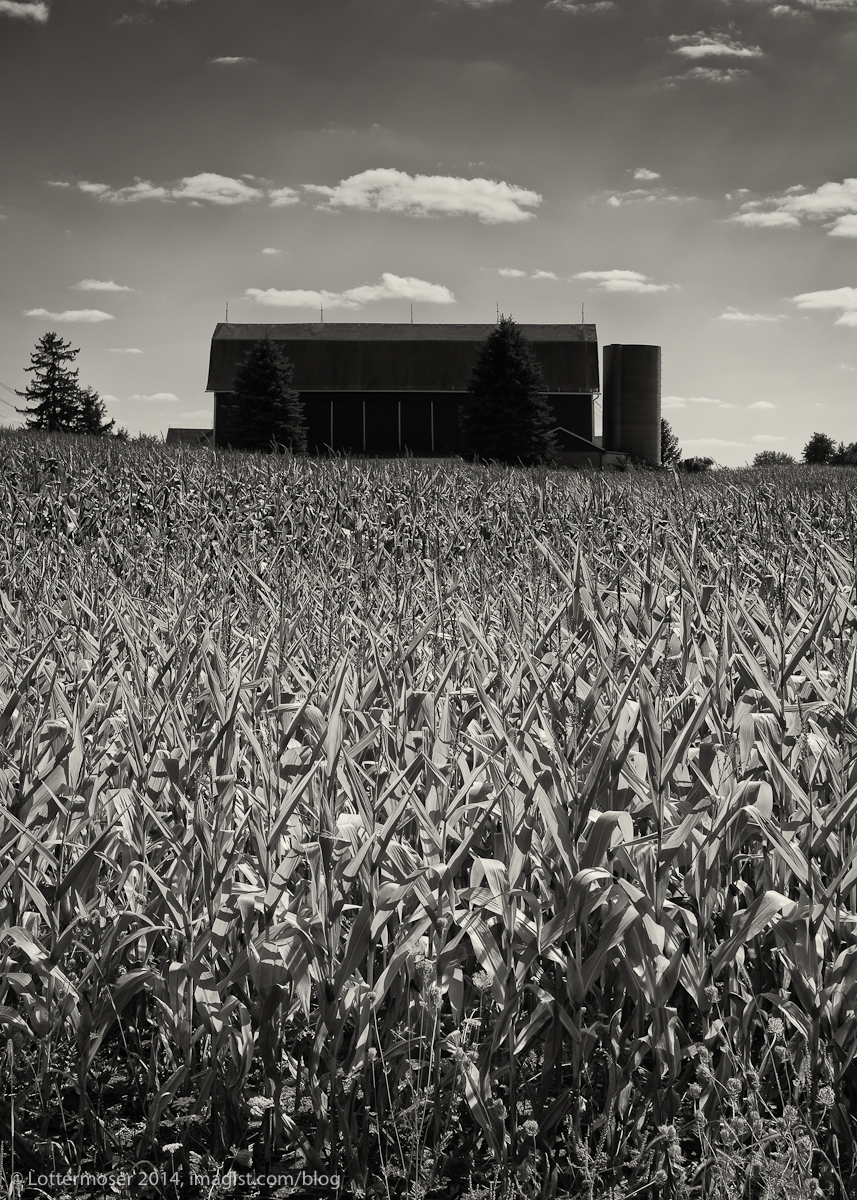
Leica M Monochrom, 50 mm Summilux Asph
We use color when the subject demands its color be seen, understood, and presented; and of course the light; always the light; along with the shapes, lines, patterns, textures, as we pass through each ephemeral moment of our life. The same reasons we reach for any other pigmented medium; whether paints, colored pencils, dyes, or pastel chalks. Because we have something to say about the color we see in the world.
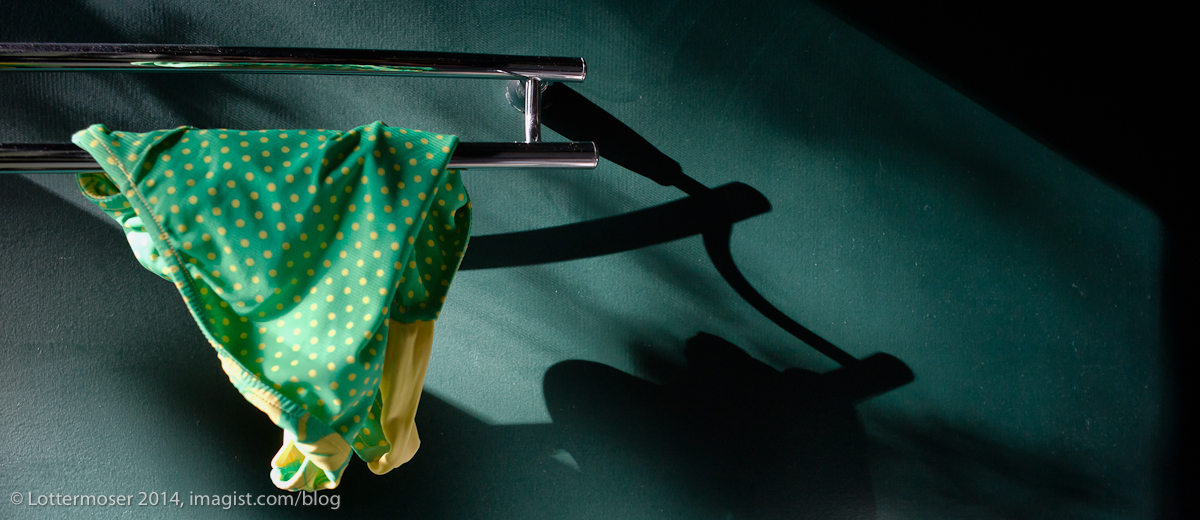
Leica M, 28 mm Summicron Asph
… found a sweet spot
in which to thrive;
with gratitude
to warmth, rain, and light
(click photographs for larger view)
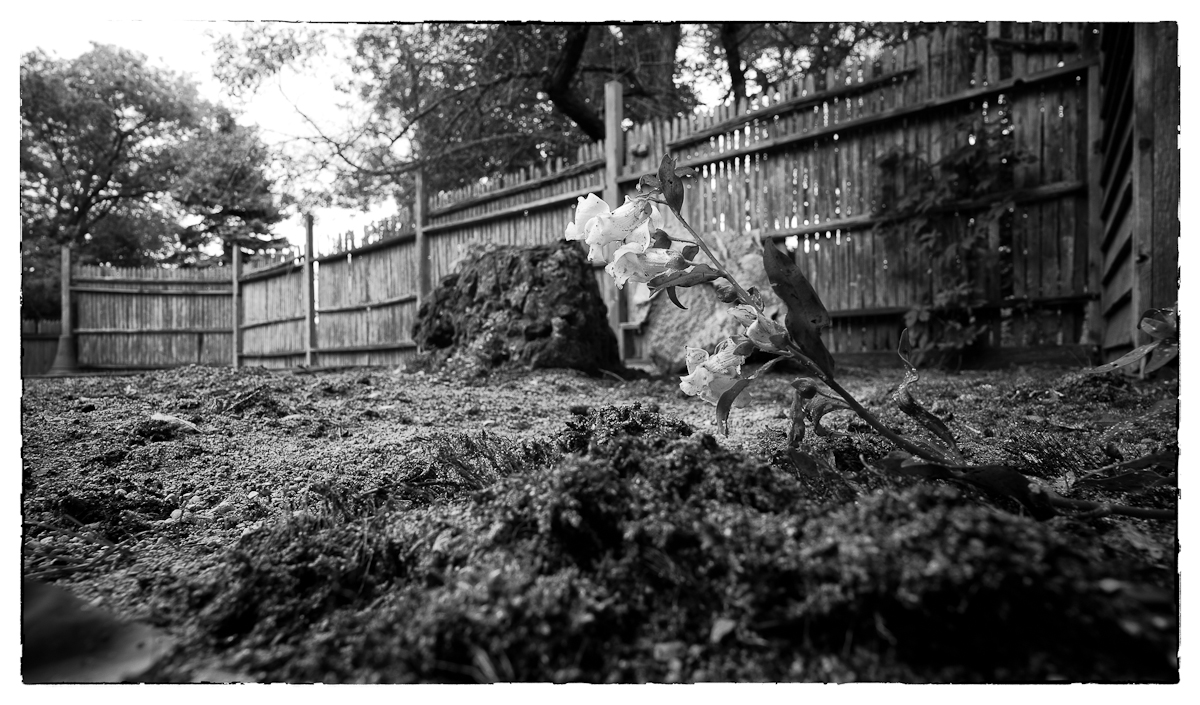
then beaten (last night)
by wind driven sand
as fall delivered its first bitter cold

Found within.
Filled with bone
dry flowers and memories;
in dusty frames;
the cedar chest left little space
for future’s fresh mementos.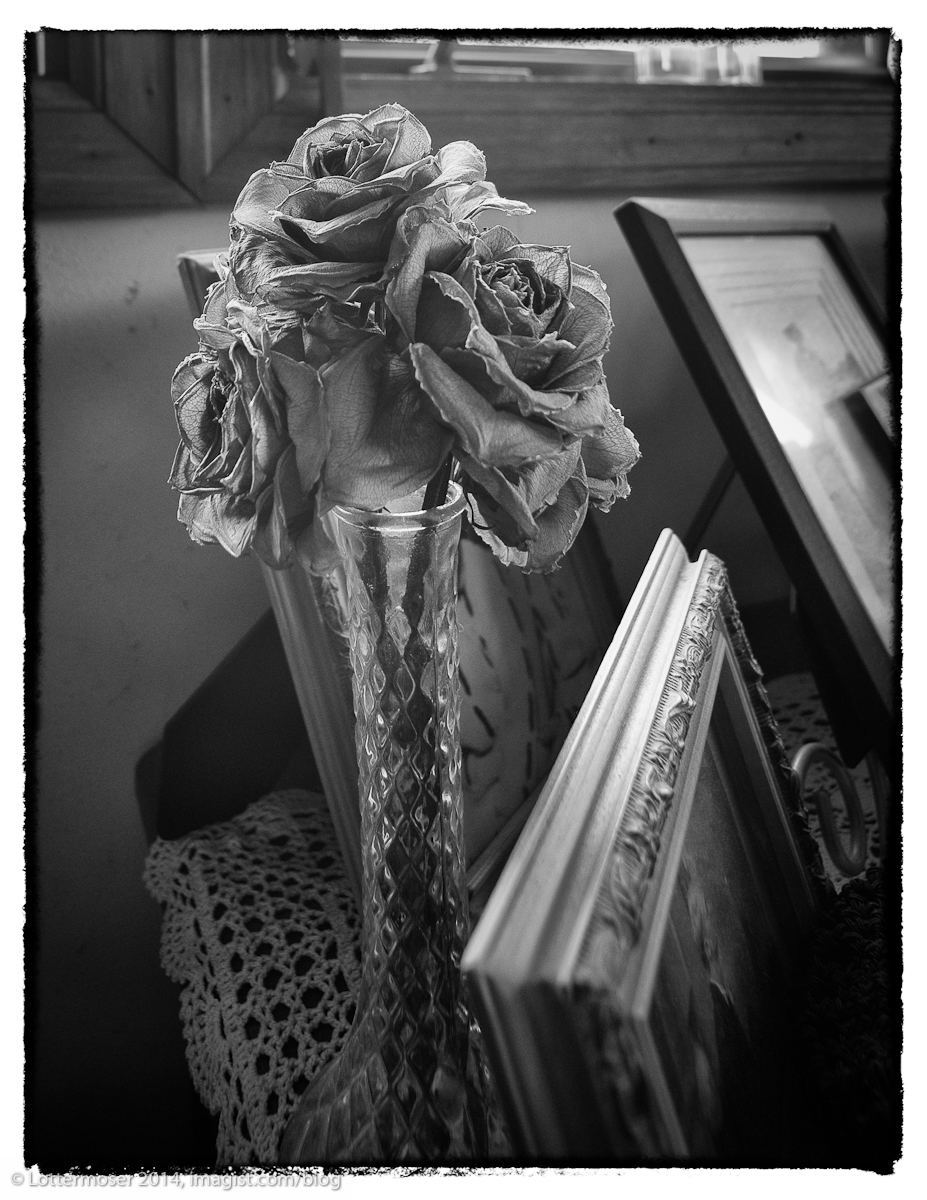
Leica M Monochrom, 15 mm Voigtlander Super Wide-Heliar Aspherical & 65 mm Elmar on Visoflex
(click photograph for larger view)
Dust to dust. Wabi (a quality of austere and serene beauty expressing a mood of spiritual solitude recognized in Zen Buddhist philosophy.) Sabi (“The concept sabi carries not only the meaning ‘aged’—in the sense of ‘ripe with experience and insight’ as well as ‘infused with the patina that lends old things their beauty’—but also that of tranquility, aloneness, deep solitude” (Hammitzsch, 46).)

Sophia and Tanya enjoying our new old hot tub for the first time.



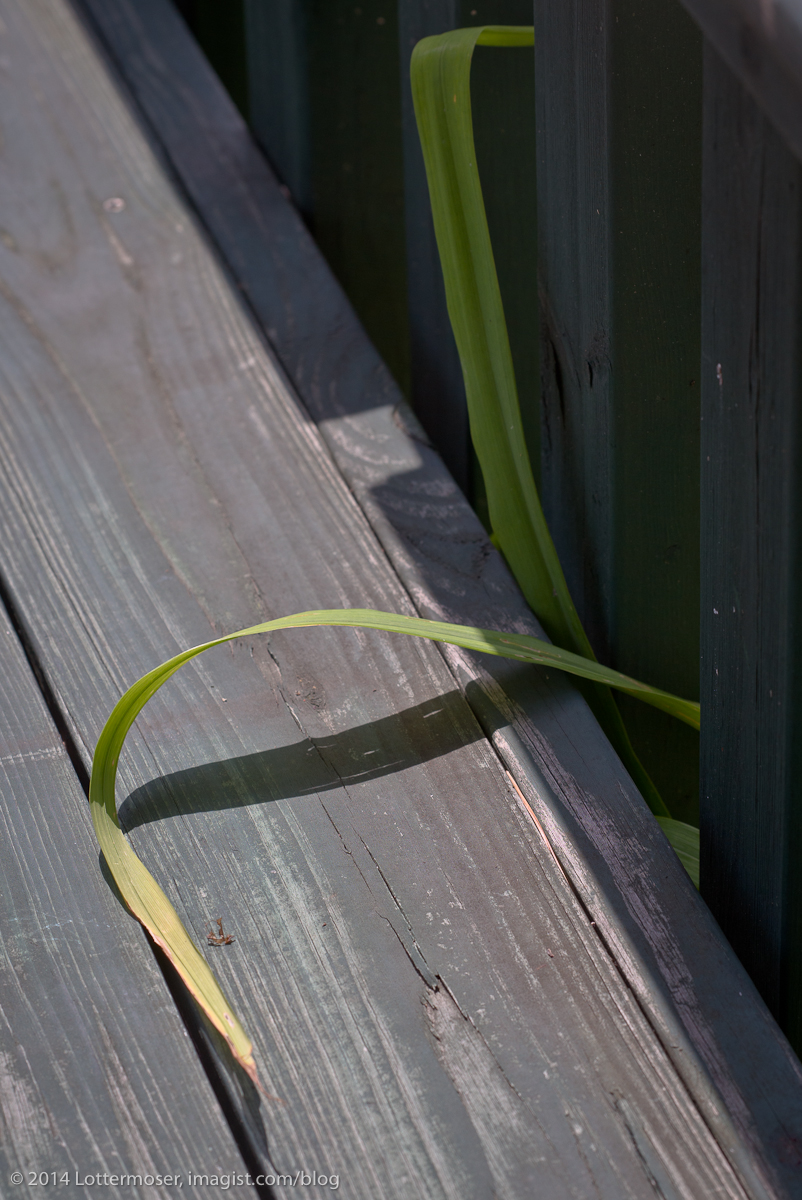
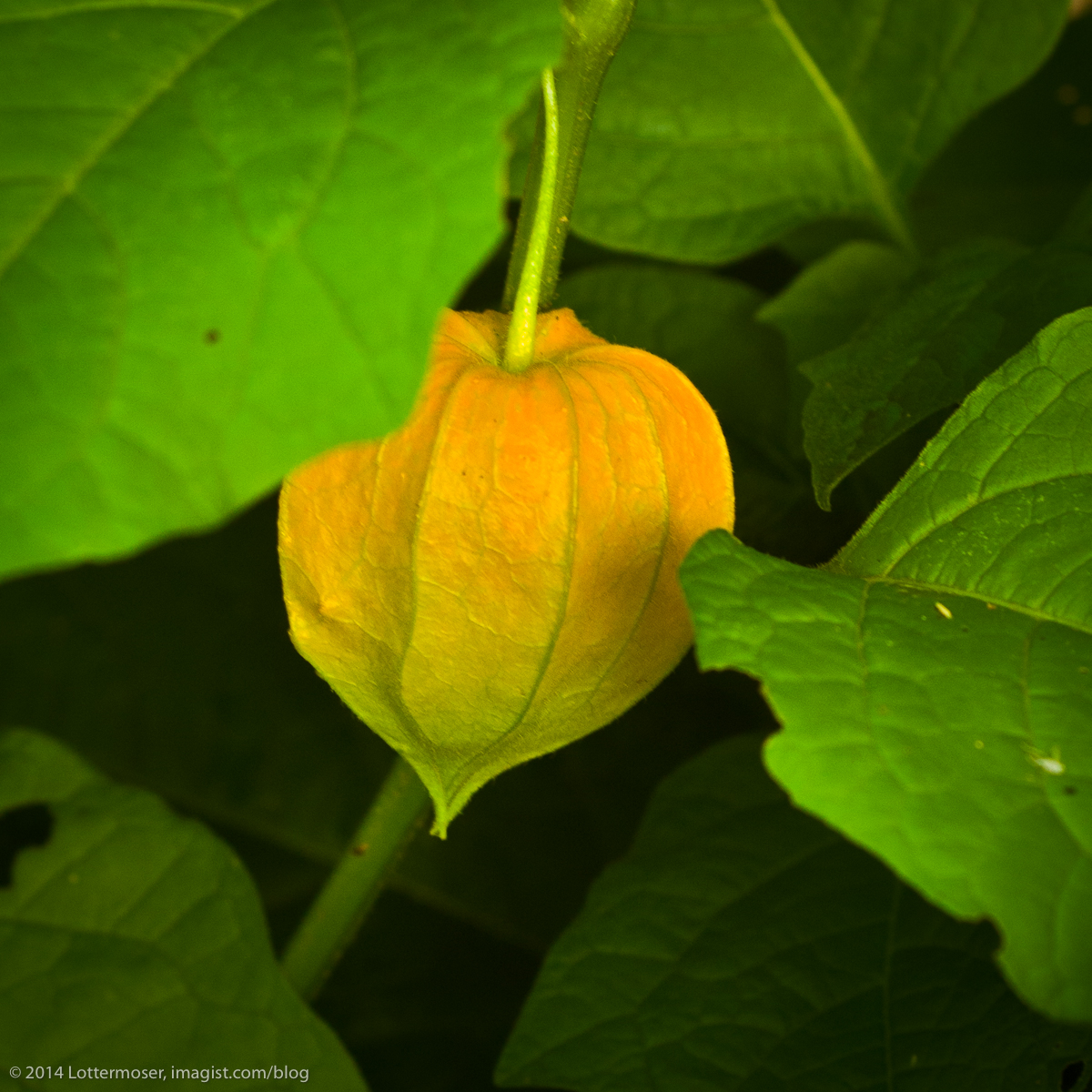
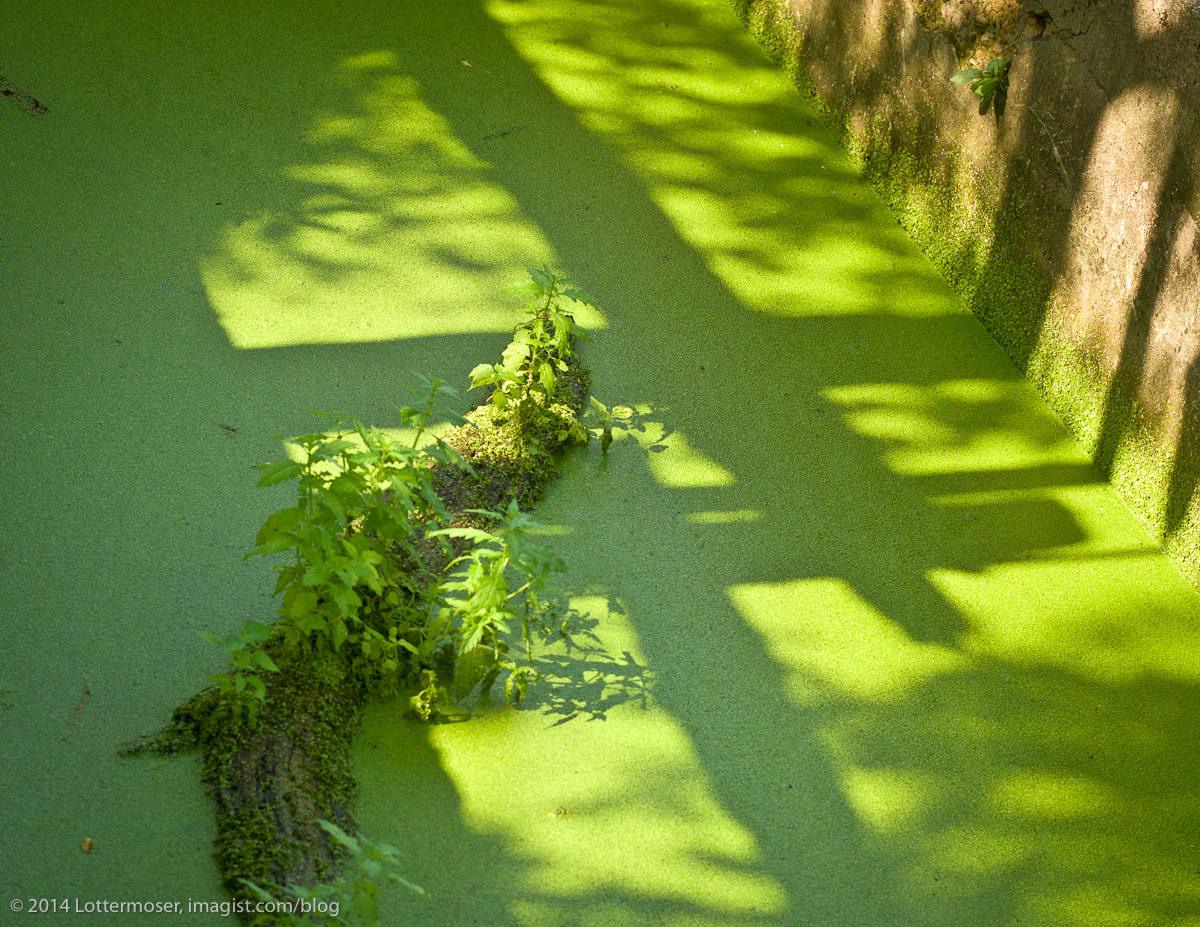
Frog
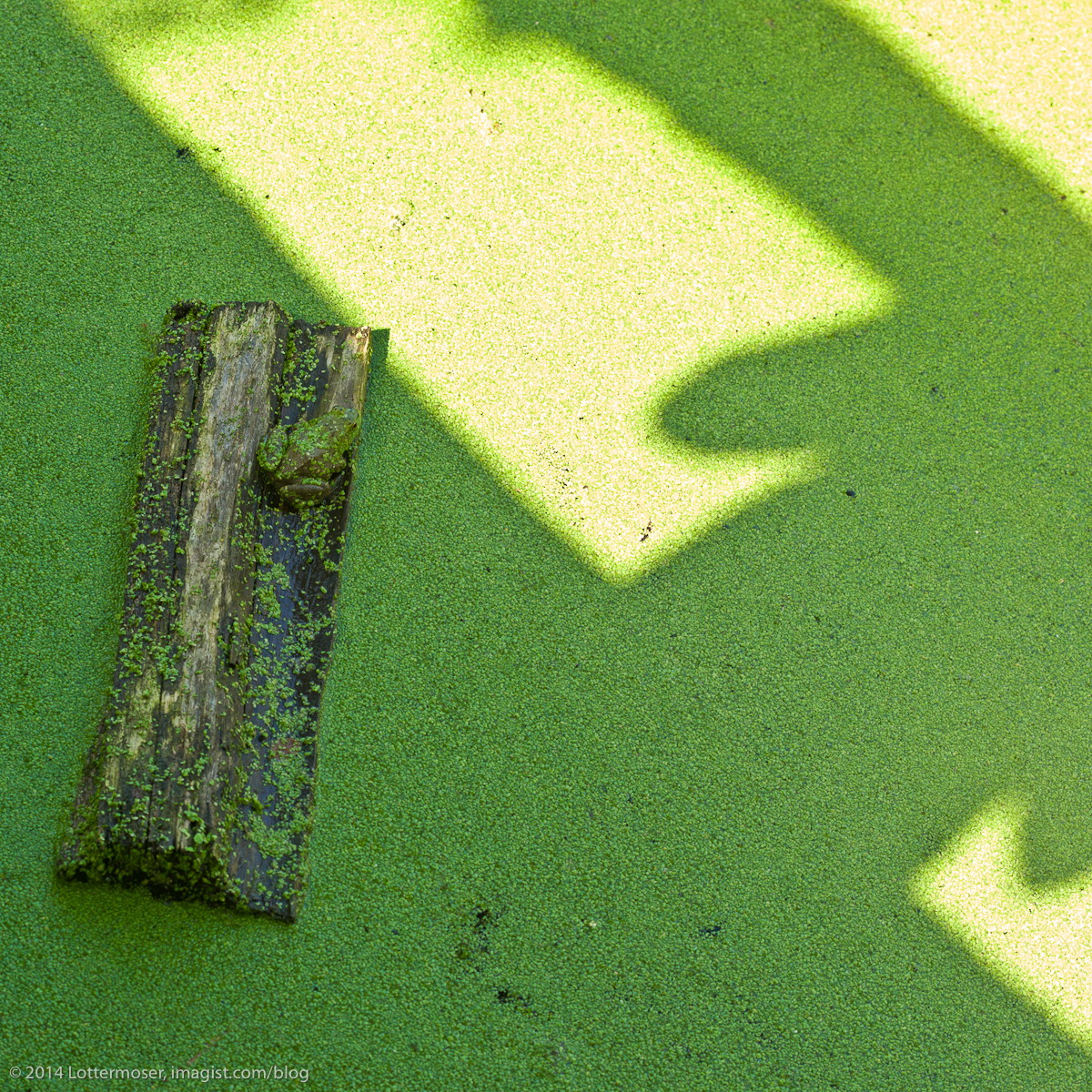
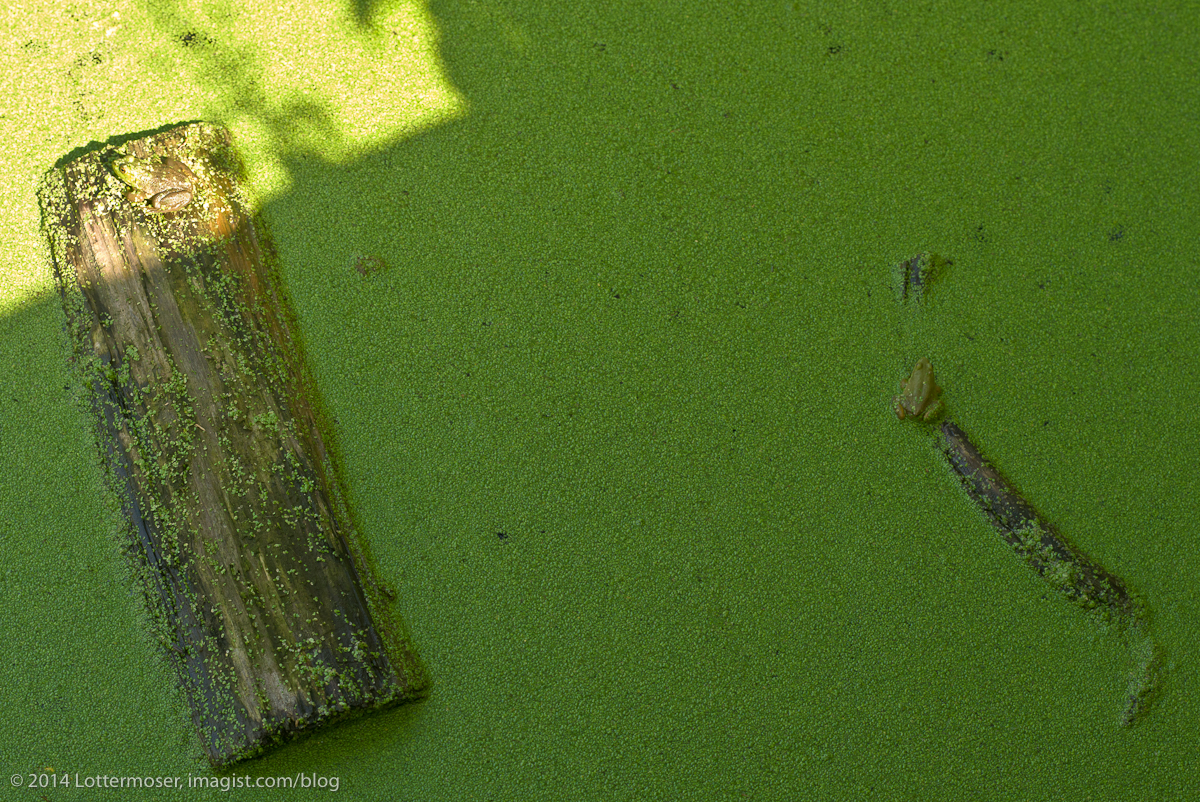
Two Frogs
Garage visitor

Sunset on the pond

Leica M, 100 mm Apo Macro Elmarit R
The 80 mm ‘lux mounted on the M makes for a relatively large and heavy package (by M standards). The 80 mm Summilux—R weighs in at 694 gr compared to the 560 gr of the 75 Summilux—M. The 80 R will let you focus down to a tad under 32″. The 75 M will actually get you a little closer at 29″ – though when you consider the focal length difference it really becomes six of one and half a dozen of the other. At some point I need to do a side by side comparison of these two ‘lux lenses to discover if there’s any significant difference between their signatures; ease of focus; or any other distinctions to take note of — or are they nearly identical twins?
Of course the smooth transition from in-focus to out-of-focus areas, at virtually any f:stop, defines these classic Leitz Summilux lenses.
(click photograph for larger view)
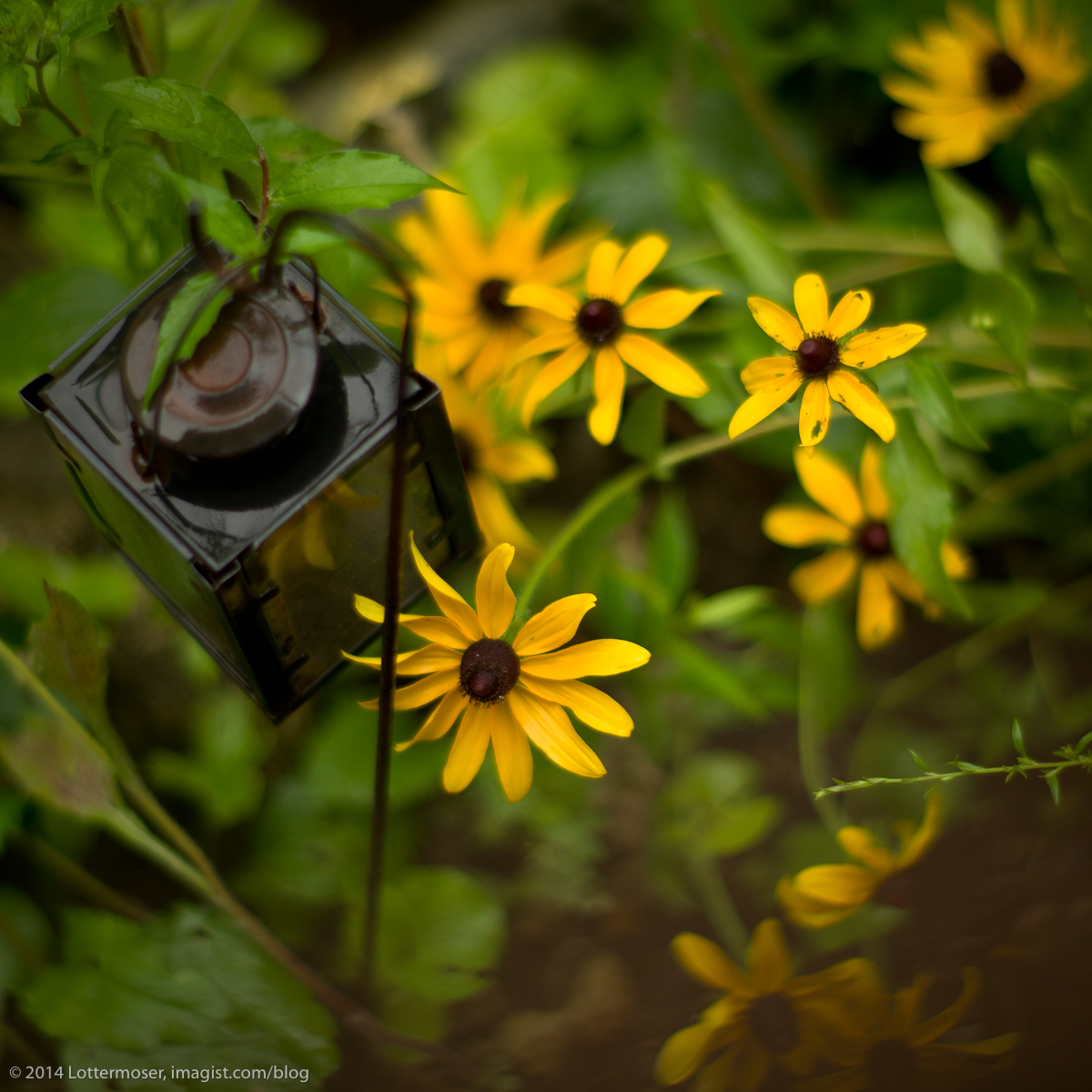
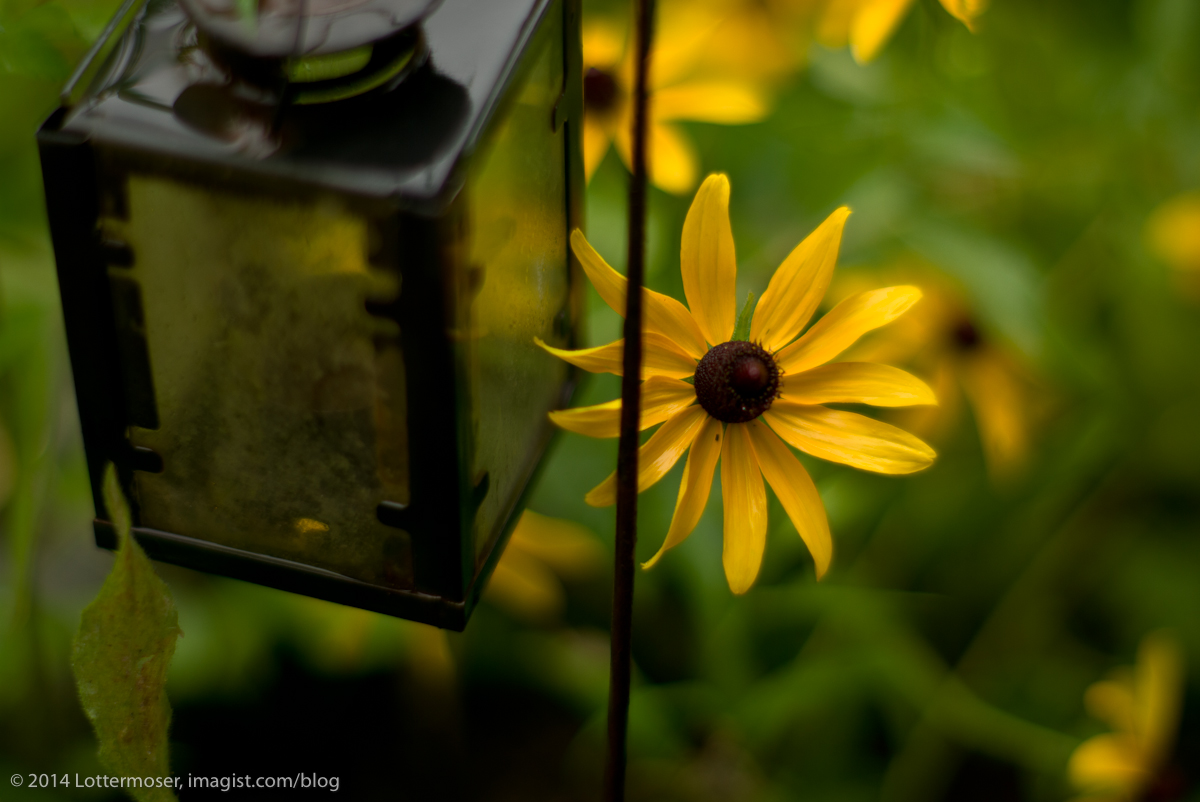


I always carried the Apo 2X Extender with my R cameras because it’s a small, light accessory which gives significant reach to whatever lenses I may be carrying. So, since using the M with R lenses, I’ve done the same. You’ve seen some examples of using the extender with the 60 mm Macro Elmarit. Below are a couple examples using the 2X with the 80 ‘lux — essentially turning it into a 160 mm f:2.8 (wide open). The first with lens set around f:2.8 (effectively 5.6 with 2X). The second with lens set at f:5.6 (effectively 11 with 2X).


Leica M, 80 mm Summilux—R
Continuing to enjoy this relatively small, relatively light kit as it simply delivers extremely fine digital photographic files. All of the visual qualities I’ve come to expect from Leica range finder and SLR cameras and lenses appear on the computer screen with virtually no post processing. With each use of the R lenses I become more comfortable with the EVF and focus assist; even as I continue to enjoy the mostly manual operation of focus, diaphragm and shutter controls. The full 24×36 mm frame of the M allows the entire M and R lens lines to perform to their full design potential. For the most part — The M (240) provides photographic joy with every use — whether as a range finder camera — or as a mirror-less EVF camera.
(click photograph for larger view)


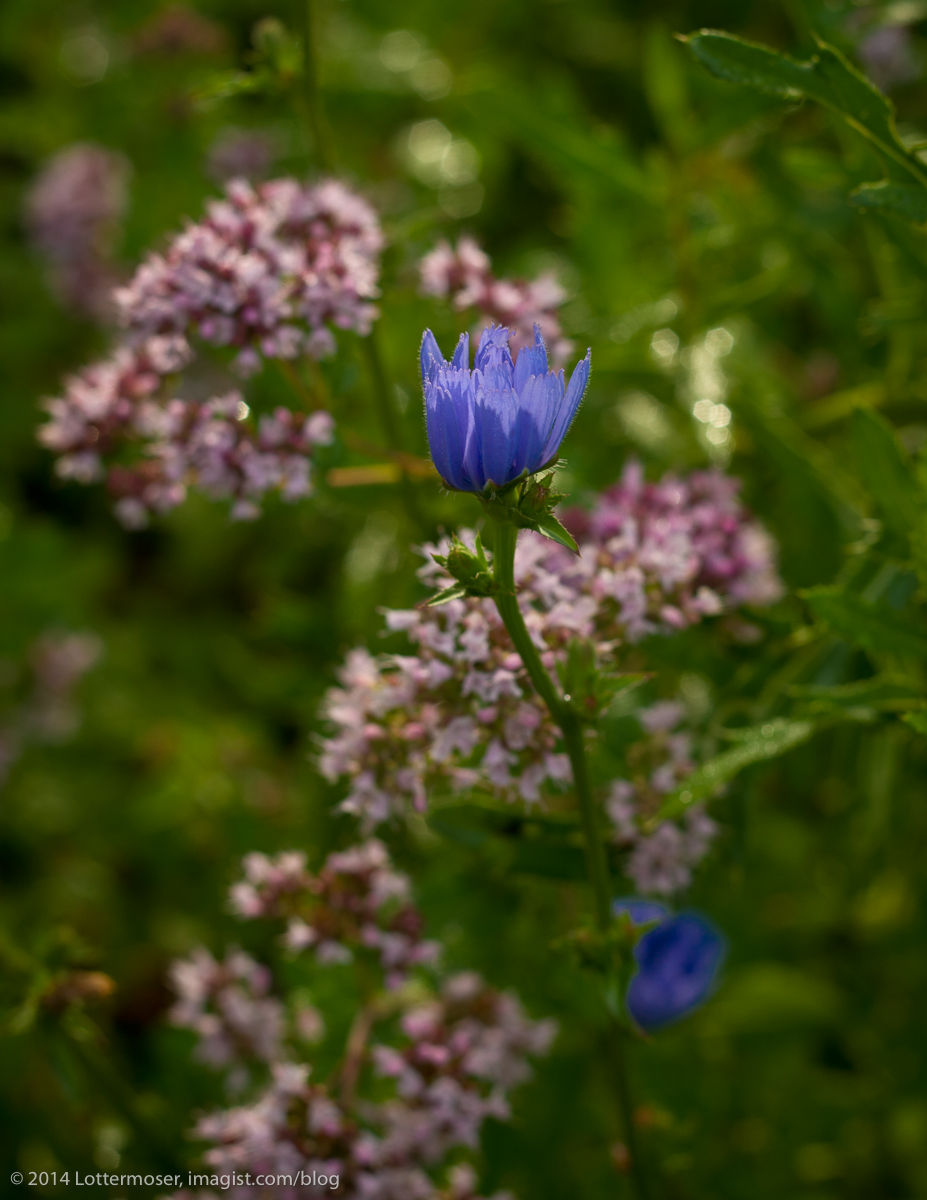
Leica M, 50 mm Summicron-R
Next up on the Leica M (240): the Leitz Wetzlar Macro-Elmarit-R 1:2.8 / 60
Just like the 35 mm Summicron-R the Leitz Wetzlar Summilux-R 1:1.4 / 50 makes a beautiful, relatively small, well balanced kit, with a great feel, fit and finish, when mated to the Leica M(240). The 50 mm Summilux also provides a respectable 20″ close focus possibility along with its classic, creamy Summilux bokeh.
The first few of these examples display the wrong exif data because I forgot to reset the Manual R Lens Detection to the 50 Summilux. Rest assured all the images in this post were made with the 50 mm Summilux_R on the M(240).
This may be the most remarkable walk around lens/camera kit I’ve had the pleasure to use. This relatively small and light combination handled every situation while delivering superb results; including a commercial studio product shoot.
Next up: Leitz Canada Summicron-R 1:2 / 50. A lighter lens than the Summilux, though about the same size.
(click photograph for larger view)

We can see this is a lovely lens for working in close at that 20″ mark.

Again focused at the 20″ mark; though this is a very small section of the Full Frame (seen below);
and certainly demonstrating the quality of both the 50 mm Summilux-R and the M(240) sensor.

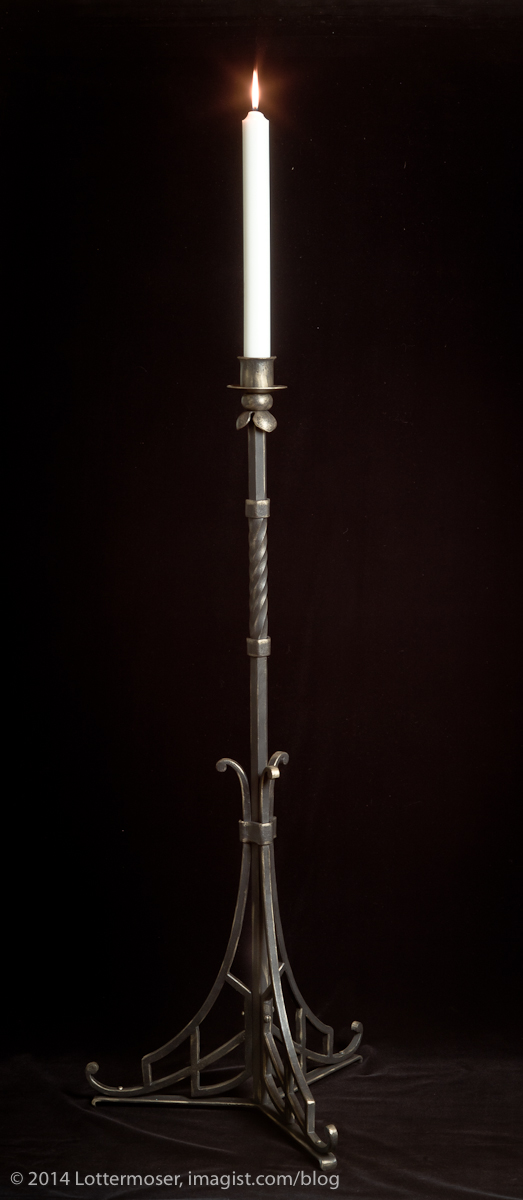
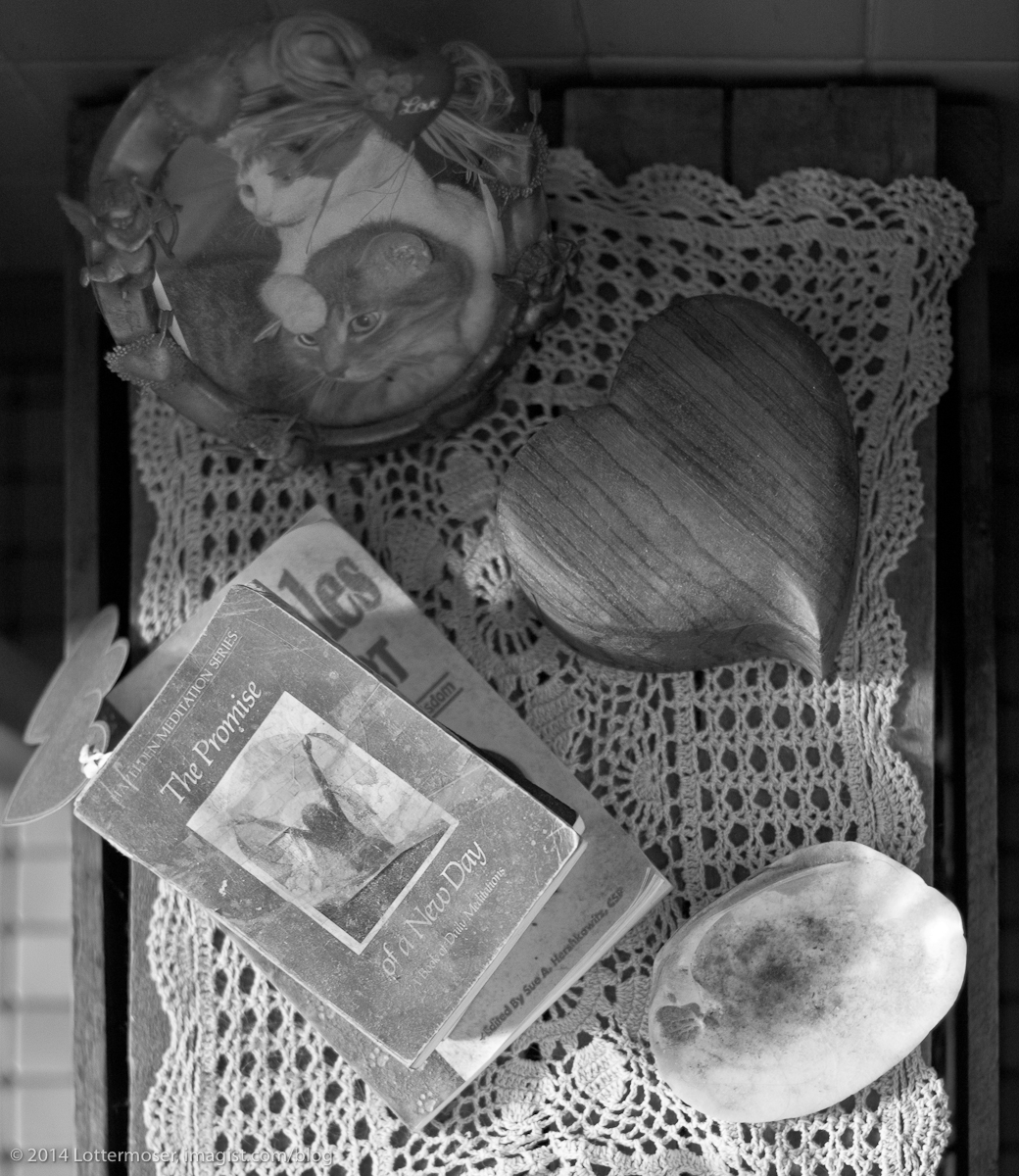

In this last example I put the 50 Summilux-R on the R Bellows.
Leica M, Leitz Wetzlar Summilux-R 1:1.4 / 50