Except for disassembly; and returns.
(additional Christmas photographs can be seen here)
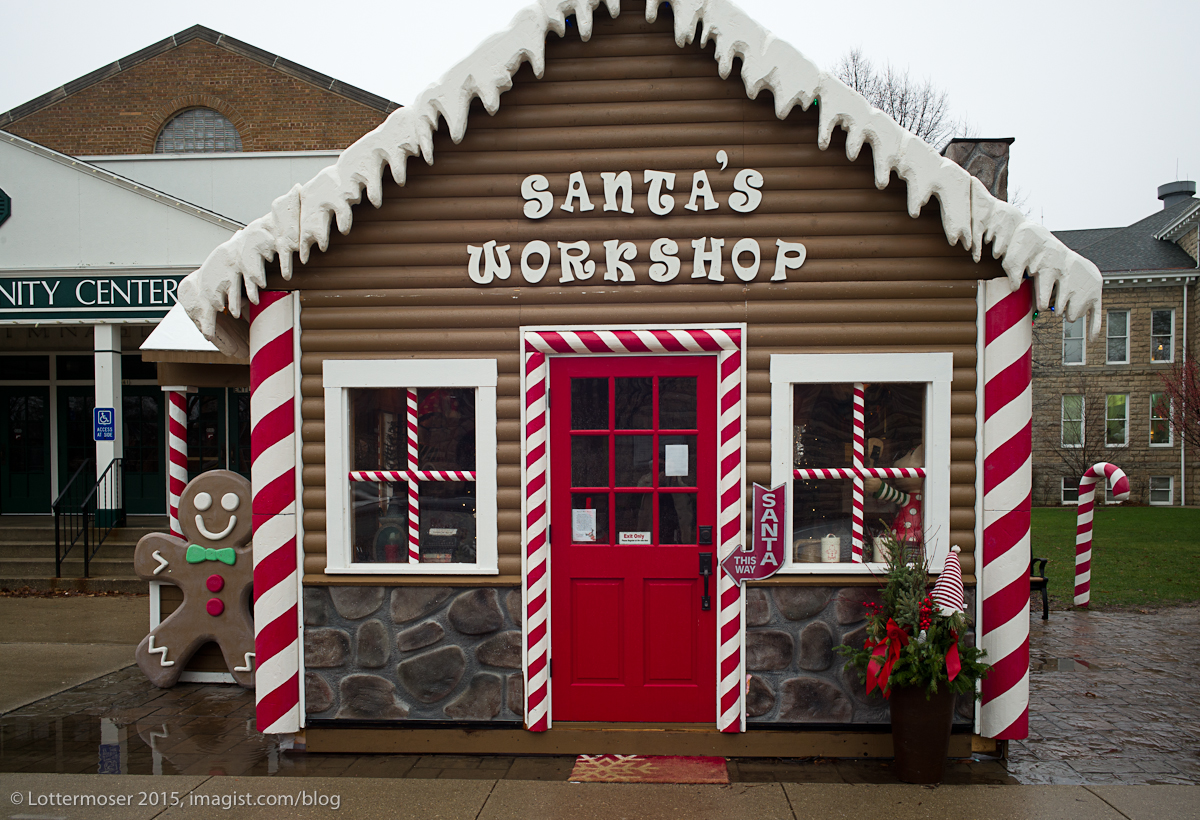
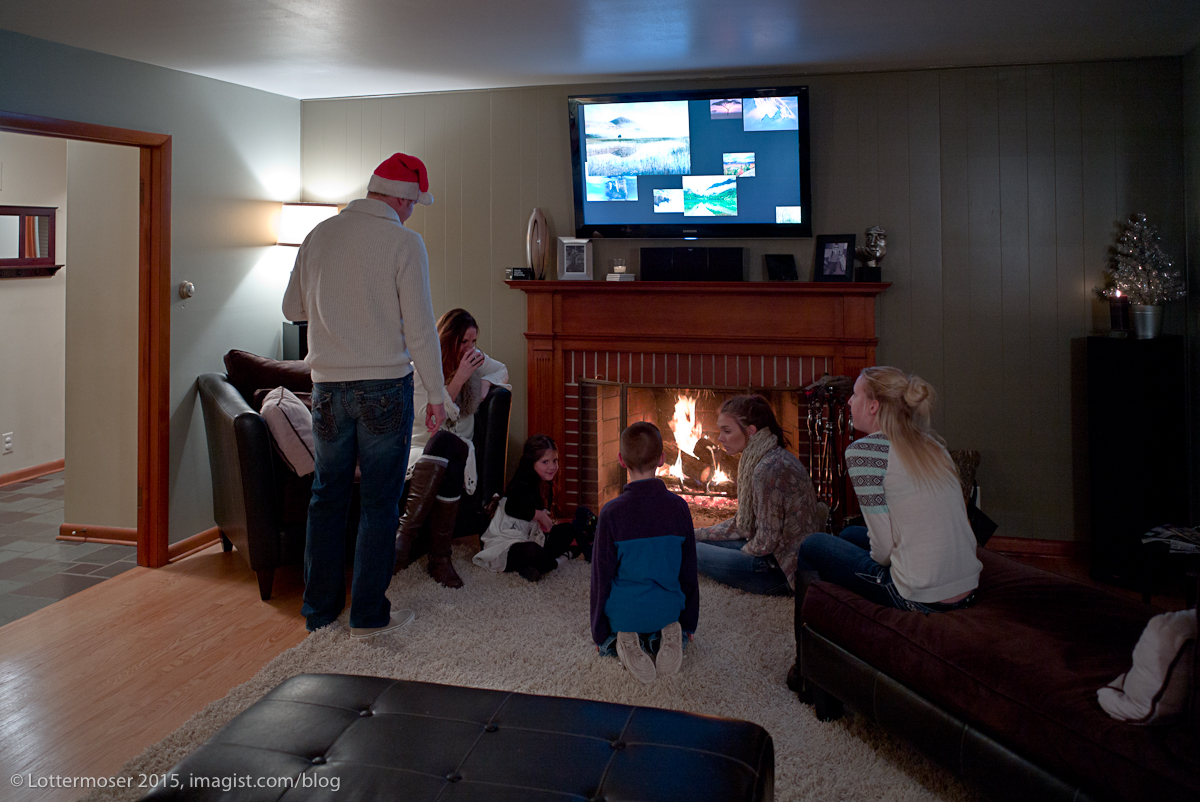
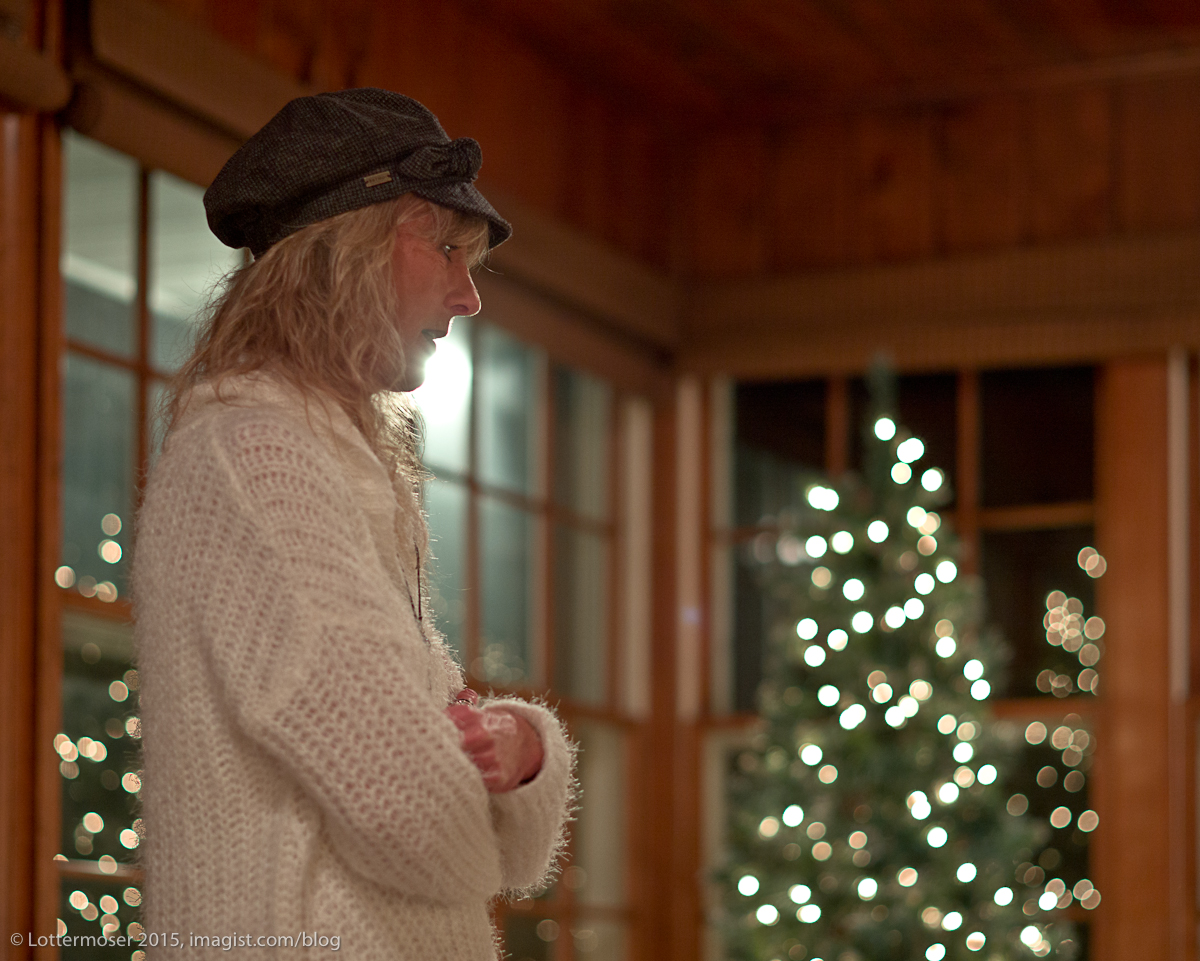
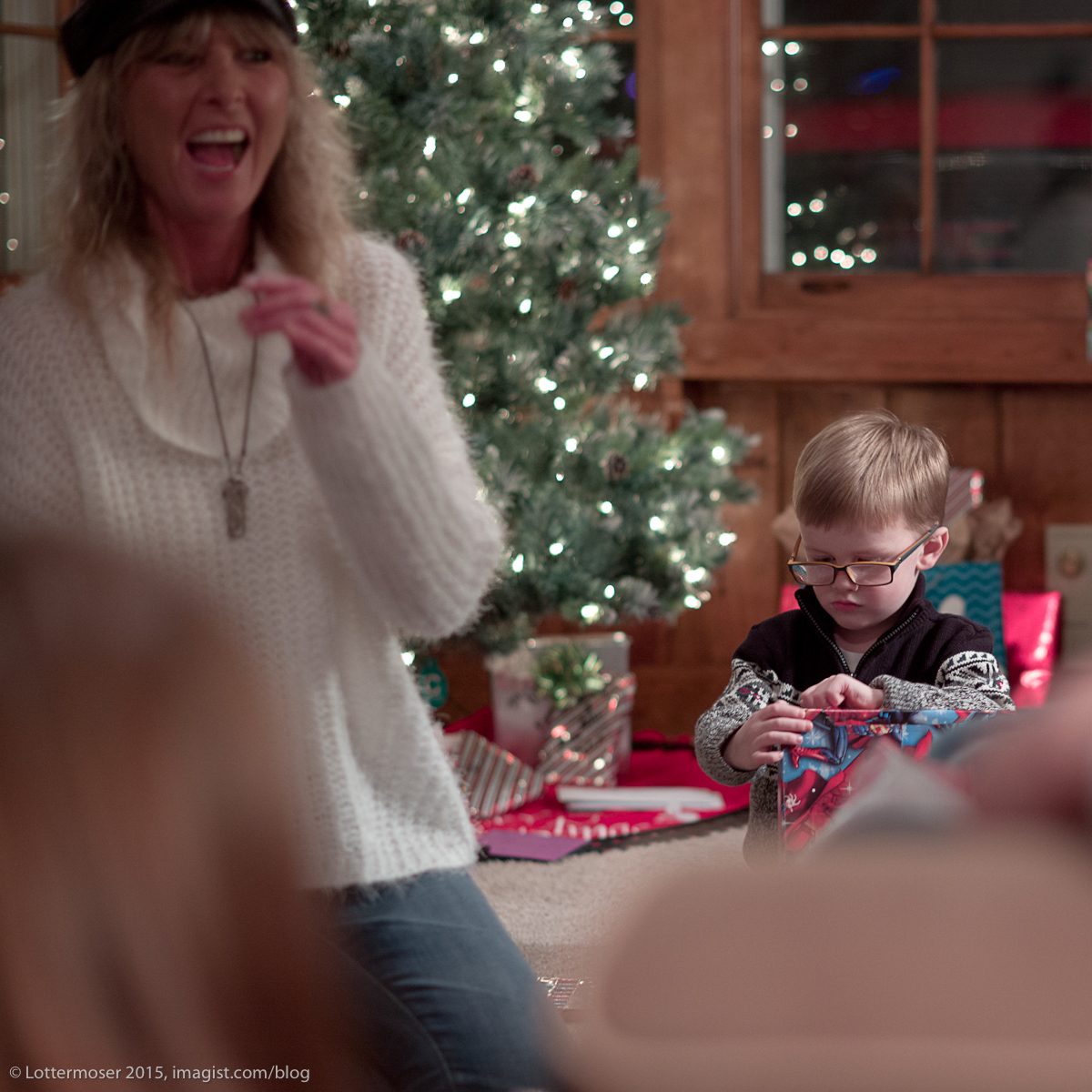
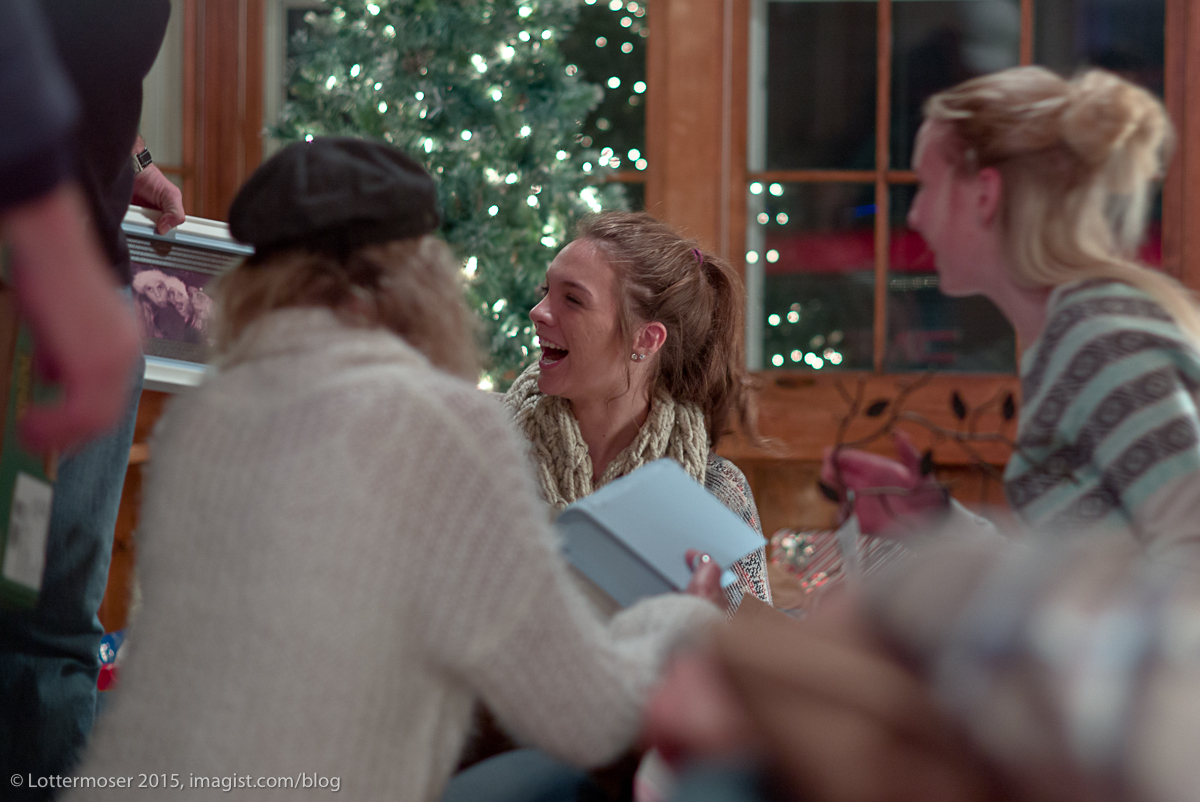
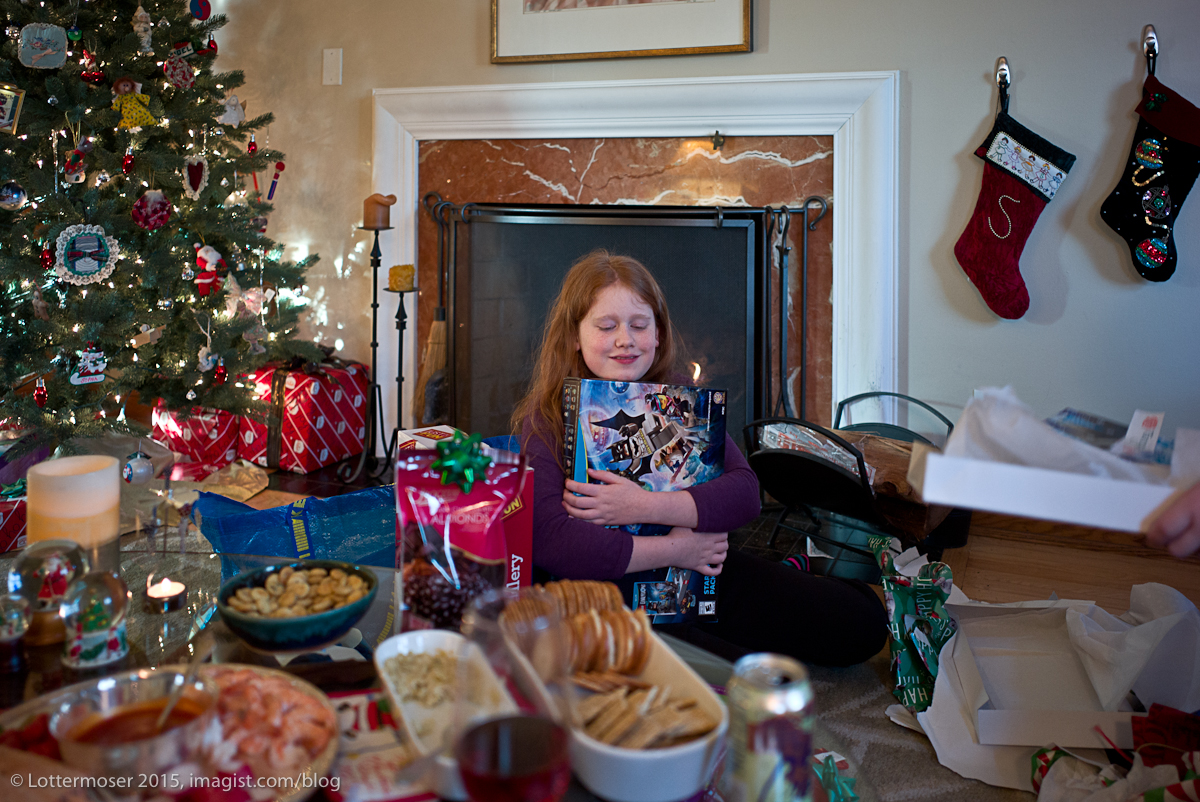
Leica M, 28 mm Summicron Asph and 75 Summilux
© 2023 George Lottermoser: photography, graphic design, video, art, literature, zen
Except for disassembly; and returns.
(additional Christmas photographs can be seen here)
Leica M, 28 mm Summicron Asph and 75 Summilux
Holiday tree in my office/studio/shop
(click photograph for larger view)
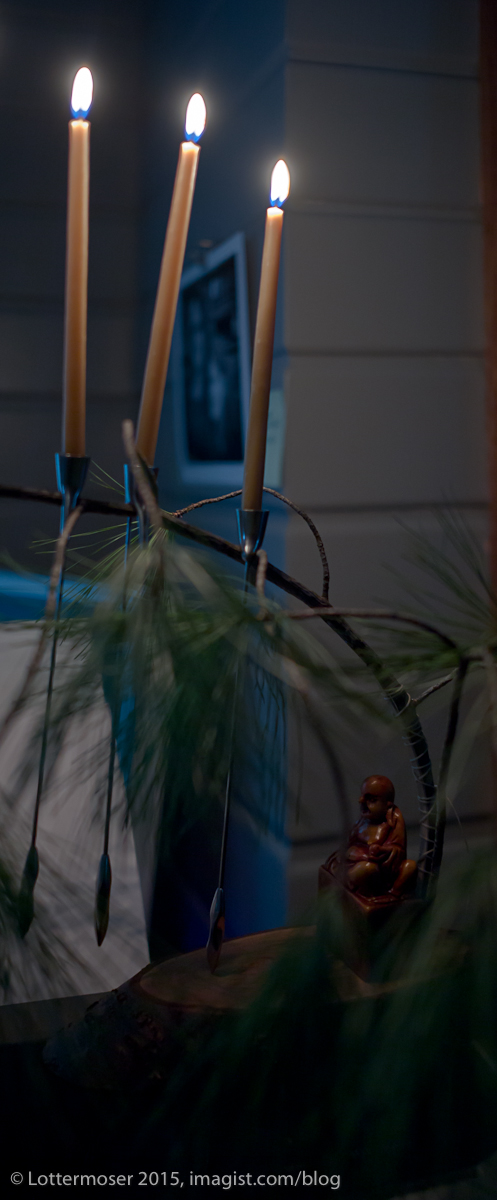
Leica M, 28 mm Summicron Asph
…or does this count for 3 and 4?
I’m obviously not very good at this “challenge” thing.
(See additional images of Sophia’s 2015 School Christmas Concert here)
(click photo for larger view)
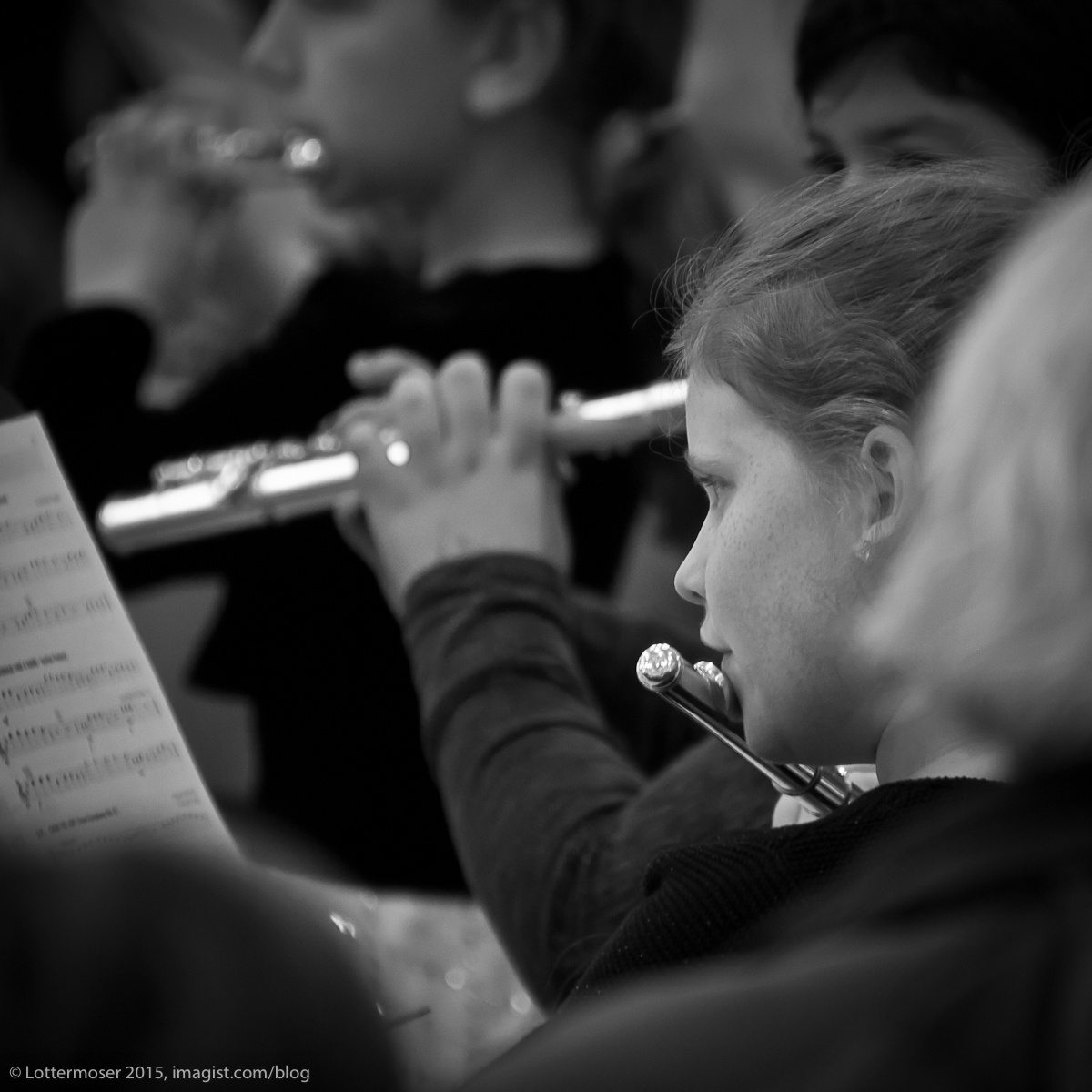
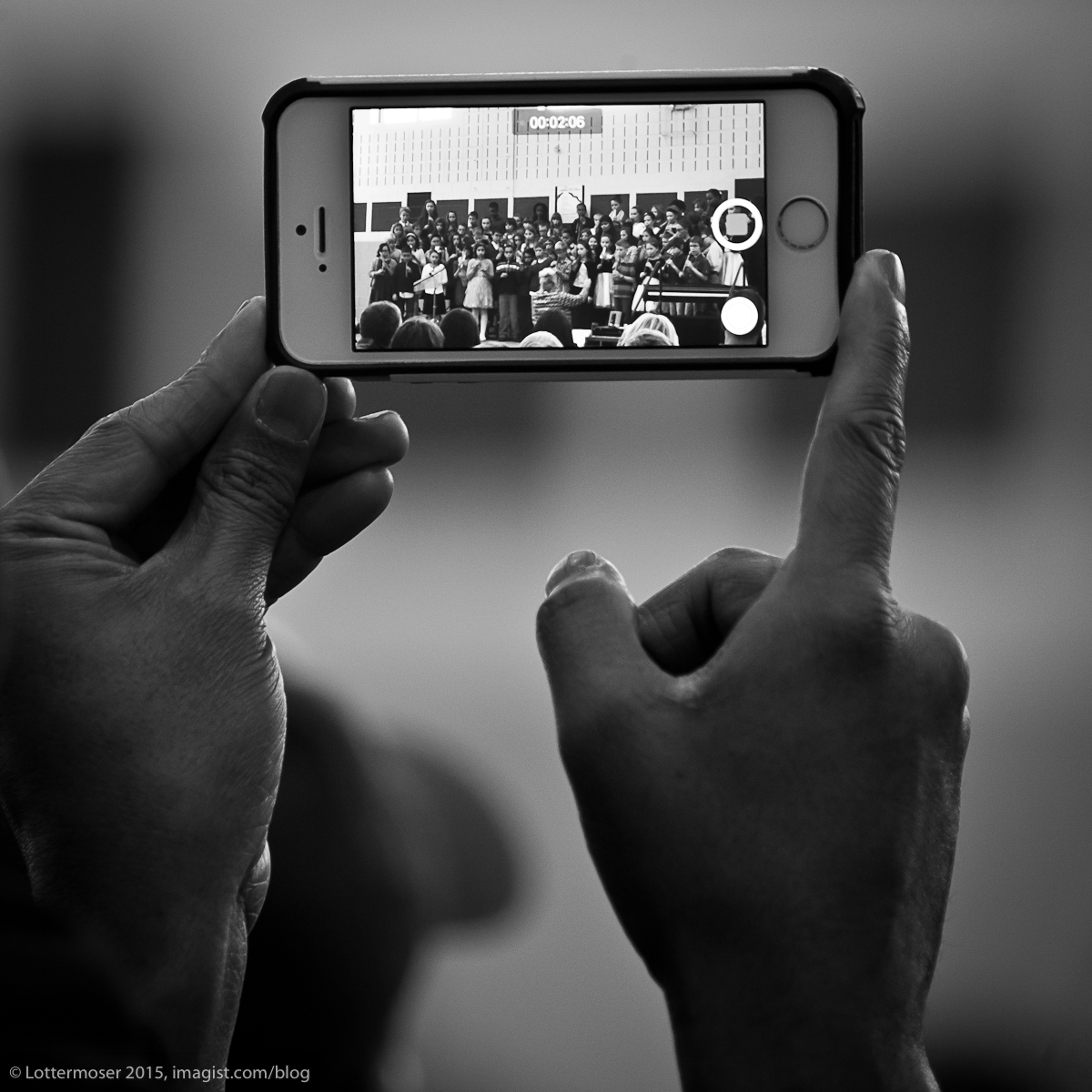
Canon 5D, 70 – 200 1:2.8 L IS USM
I’ve missed two days in the challenge “to post a new black and white photograph each day for five days.” So I’ve reinterpreted the challenge “to post five new black and white photographs over a period of ten days.” So here is [number 2 of 5] on day four.
The Gift of a Pear
(click photograph for larger view)

Leica M, 28 mm Summicron + OUFRO
A fellow photographer challenged me to post one black and white photograph each day for four or five days in a row.
This is the first for that challenge.
And while making this photograph another customer in this restaurant went to the host and told him that he was uncomfortable with my photographing his group. The host came to me… and told me this fact; very quietly and politely. I had not been photographing him or his group. I was doing some light measuring with the meter in the camera; and then photographing this bartender’s gesture.
I thanked the host for sharing. And thought to myself, “this same group has been doing selfies which had to include most of the bar, and its customers, in focus; did they care about those ‘others’ appearing in their selfies?” As a documentarian I find these “types” very depressing. Makes one think, “why even bother documenting the human condition?” It’s the type of thing which has driven at least one photographer/friend from pursing his love of the craft.
(click photo for larger view)
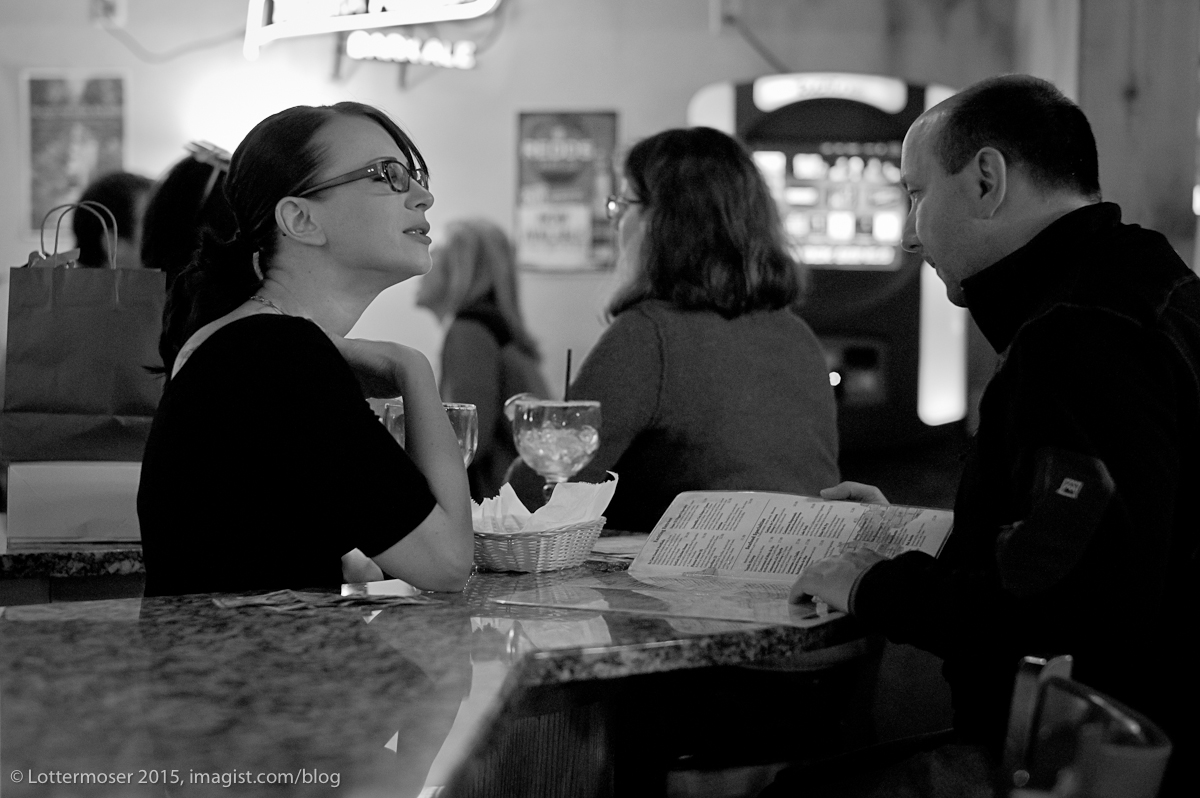
Leica M Monochrom, 50 mm Summilux Asph
The following rendering and focus tests involve the Leica M8 camera set at ISO 160, mounted to a Leica Table Top Tripod, and with a 40 mm Summicron lens: 1) without a filter; 2) without a filter converted to black and white; 3) with a B+W F-Pro 092 Infrared Filter; 4) with a B+W F-Pro 093 Infrared Filter.
A cable release was used to engage the shutter. The lens is set between f:2 and f:2.8 for all samples. The rangefinder is focused on the top edge of the vase; just above the ceramic medallion. The 40 mm Summicron has depth of field indicator marks on the lens barrel at f:2.8, f:4, f:5.6 and f:8. After focusing with filters on: an exposure was made after moving the indicated distance one line to the right (closer); then the next; etc. In each case the white balance dropper was placed on the lower right corner of the light switch.
The results: We can observe the infamous “magenta” Infrared Light effect in the unfiltered photograph. And the “average” black and white rendering when converted to B&W. We then observe the distinctive IR effect with the 092 filter. And as expected the focus moves out away from the original full spectrum focus (from the front of the vase to the light switch). We discovered that the 092 filter requires moving the focus to at least the f:2.8 mark; probably a tad more. This test also confirms my original tests (a few weeks ago) that the 093 filter requires a move to the f:4 mark. I also found it quite interesting just how differently the two filters DO render the subjects. Also as expected the IR filtered images do exhibit a slightly “softer edge.” And I believe that the 093 is ever so slightly softer than the 092; which may make sense insofar as it’s cutting at a higher frequency.
Oh. And by the way… the 092 allows 4 stops less light to reach the meter/sensor… the 093 allows more than 6 stops less light.
(click photograph for larger view)
1) First exposure: no filter.

2) Same as above though converted to black and white.
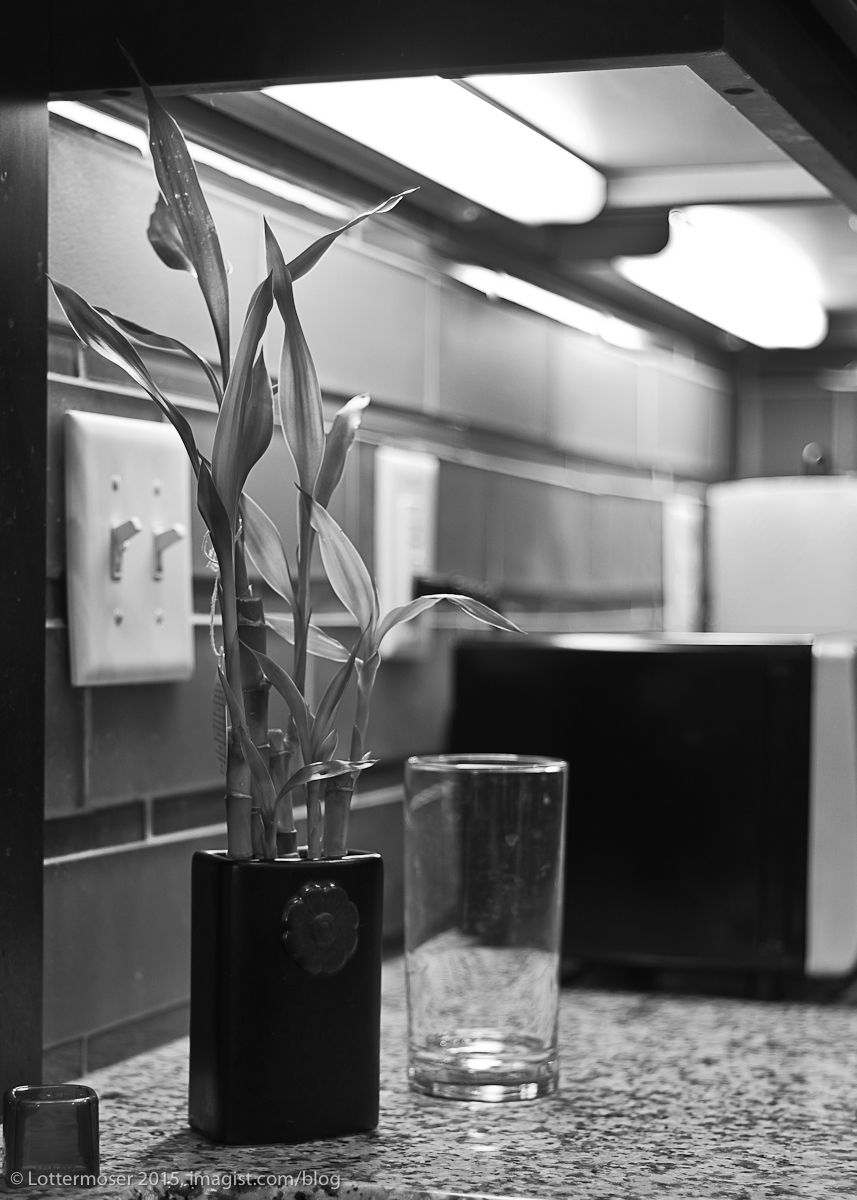
3a) With B+W F-Pro 092 filter. Rangefinder focused as if unfiltered.
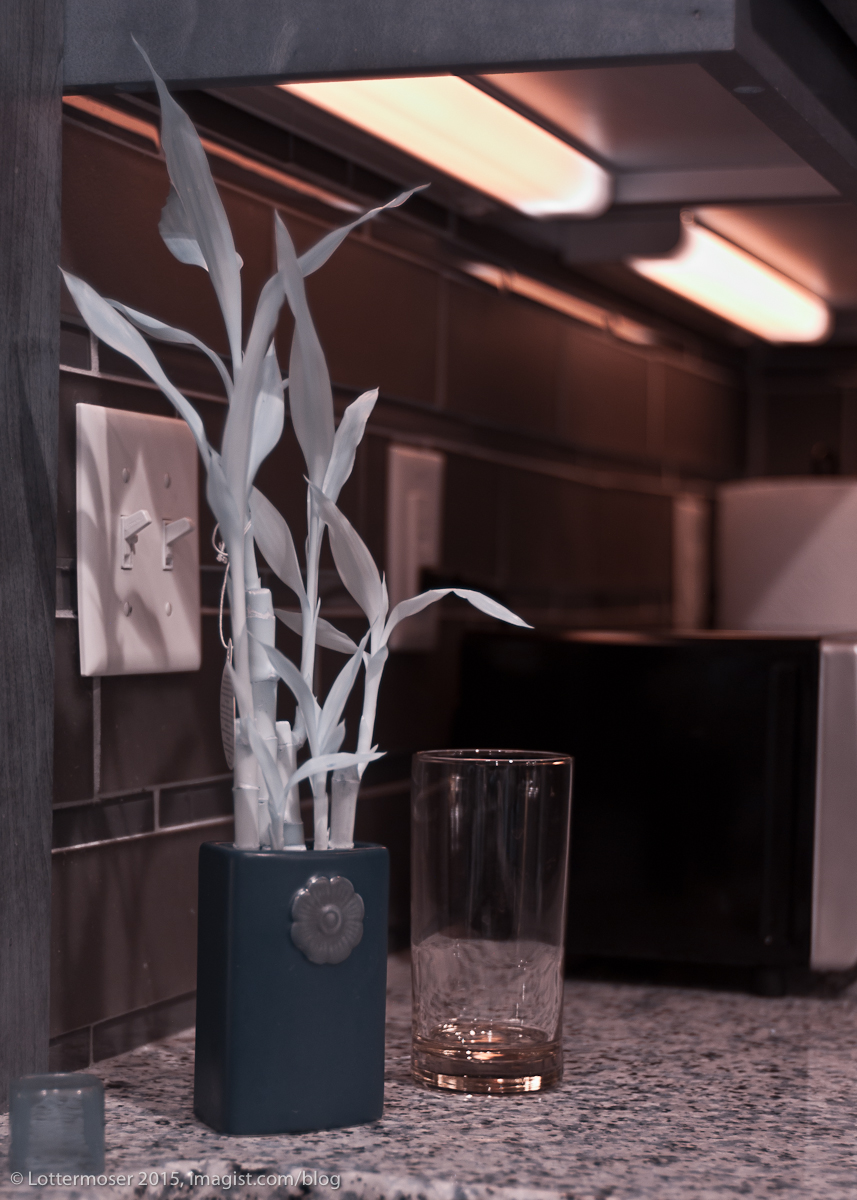
3b) With B+W F-Pro 092 filter. Rangefinder focus moved right to f:2.8 mark.

3c) With B+W F-Pro 092 filter. Rangefinder focus moved right to f:4 mark.
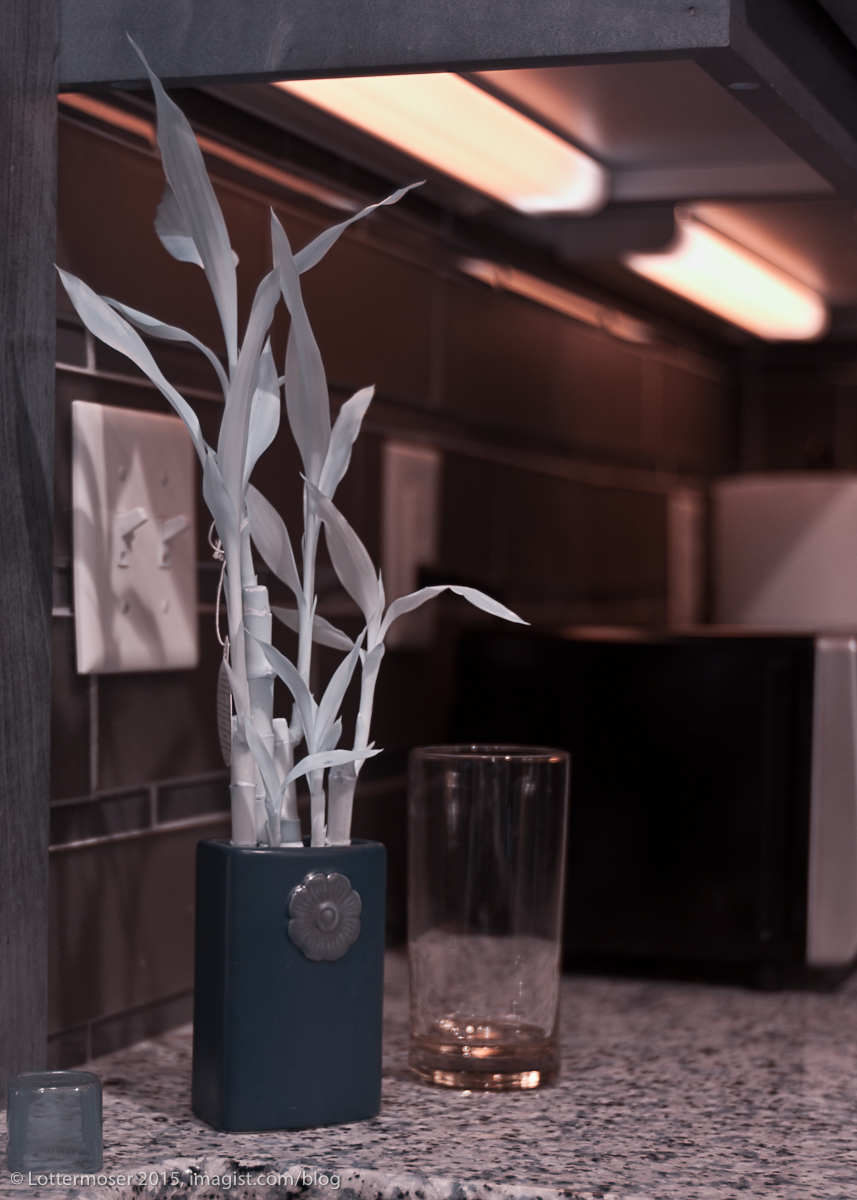
3d) With B+W F-Pro 092 filter. Rangefinder focus moved right to f:5.6 mark.
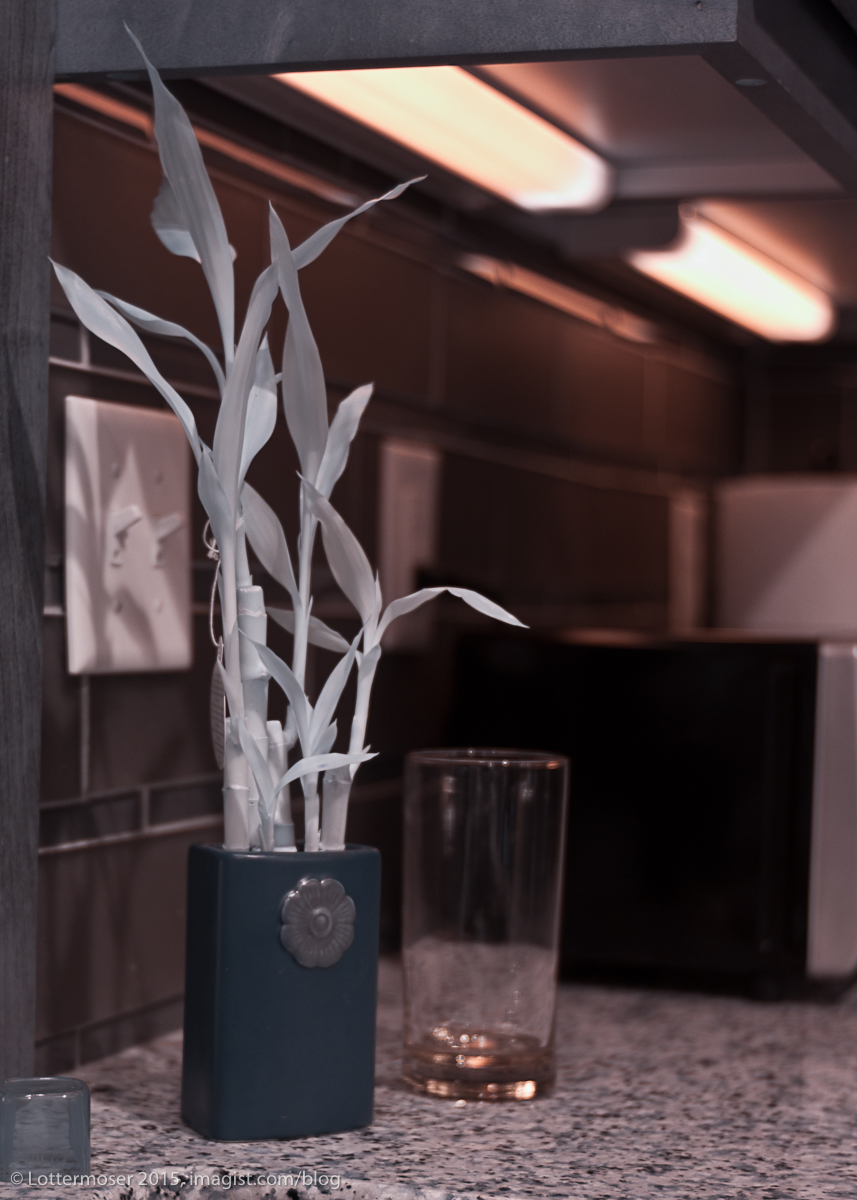
3e) With B+W F-Pro 092 filter. Rangefinder focus moved to f:8 mark.
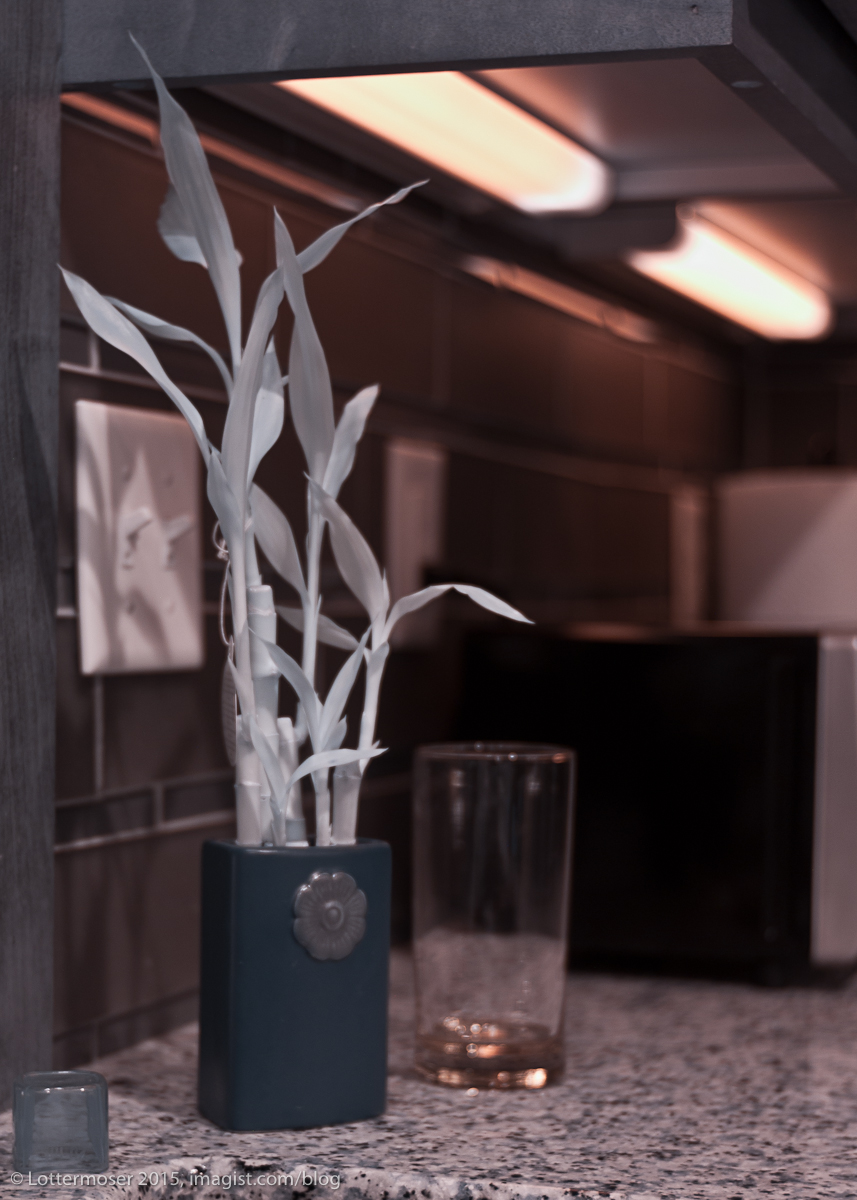
4a) With B+W F-Pro 093 filter. Rangefinder focused as if unfiltered.
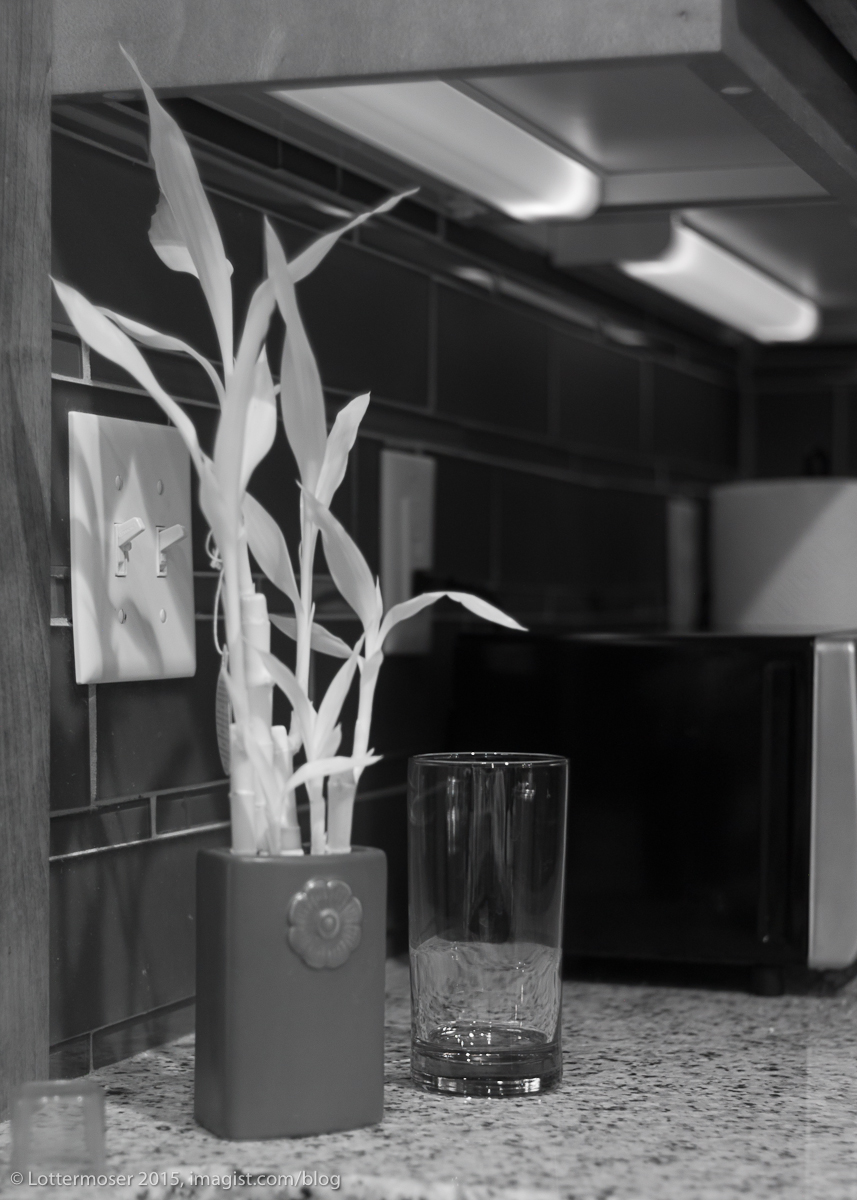
4b) With B+W F-Pro 093 filter. Rangefinder focus moved right to f:2.8 mark.
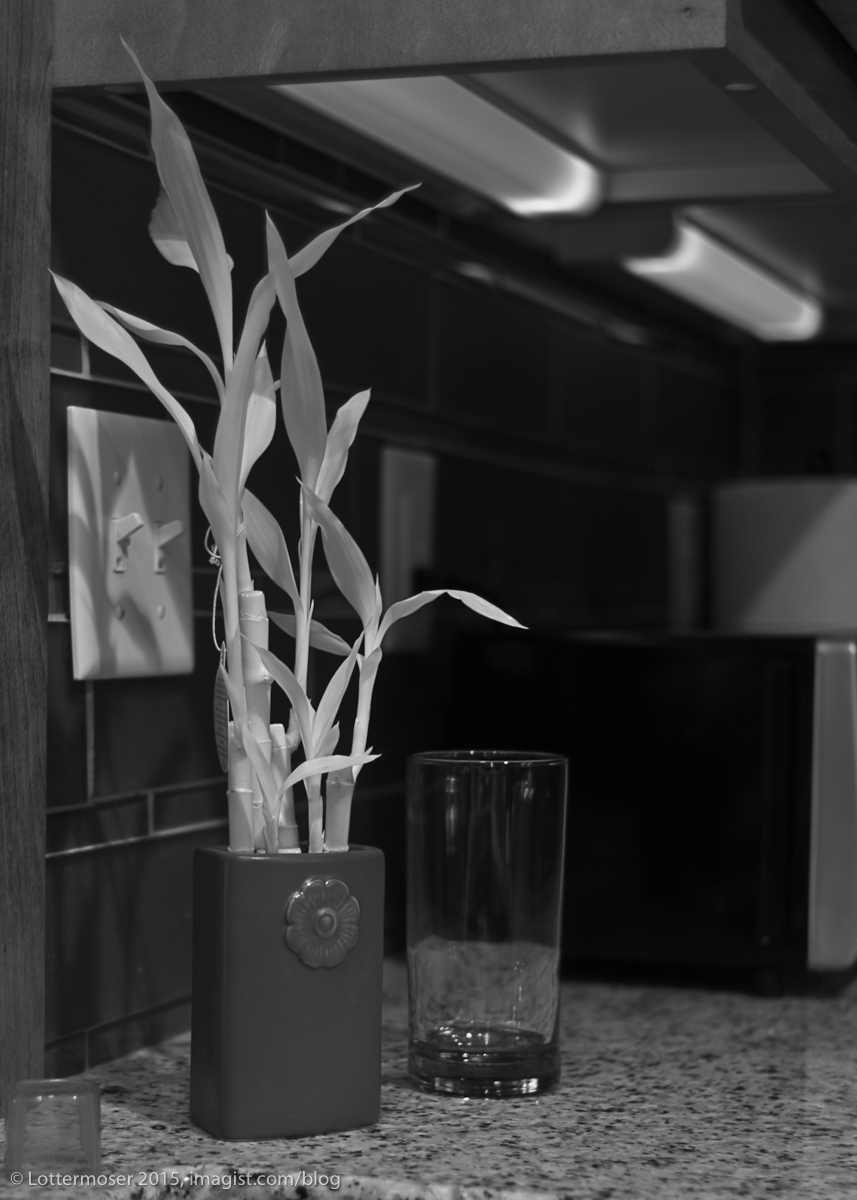
4c) With B+W F-Pro 093 filter. Rangefinder focus moved right to f:4 mark.
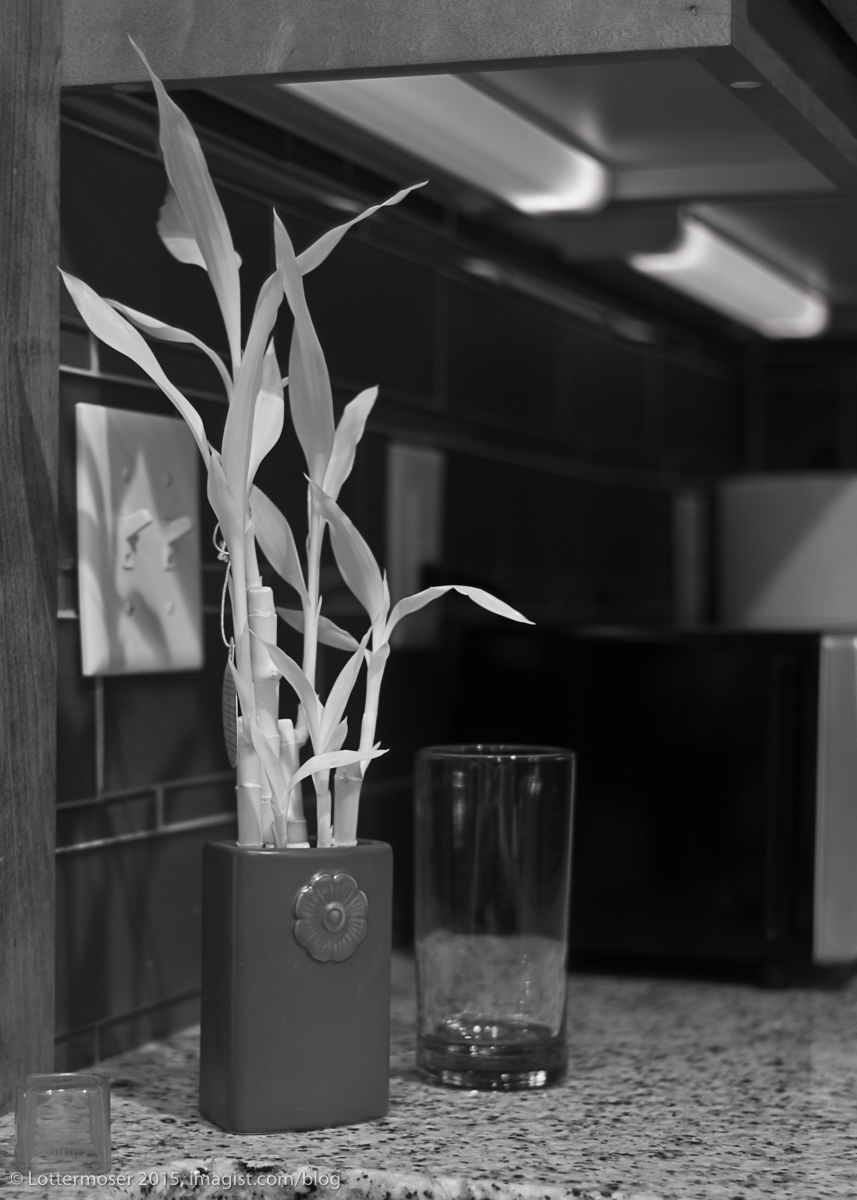
4d) With B+W F-Pro 093 filter. Rangefinder focus moved right to f:5.6 mark.
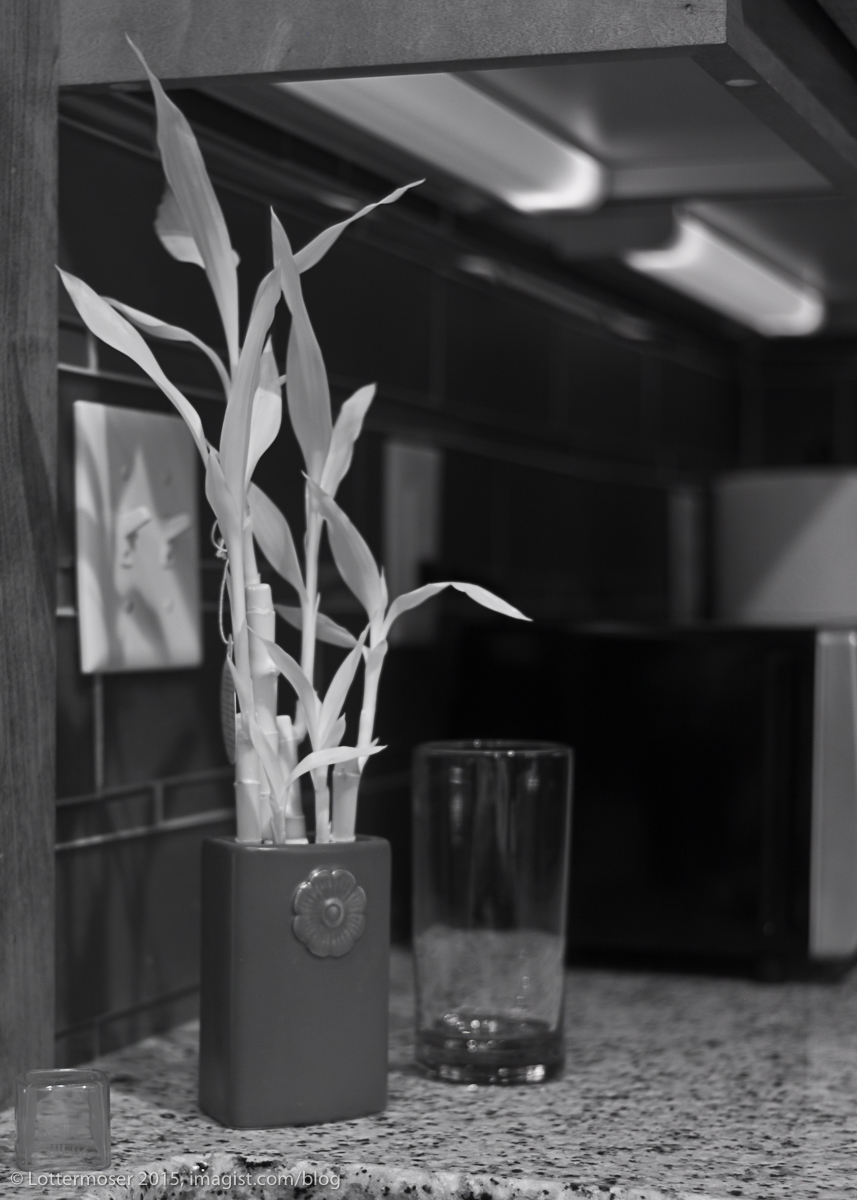
…barely awake
gazing out the bathroom’s South window
simply enjoying the lines
and tonal values
…contemplating possible renderings
of the scene
(click photograph for larger view)
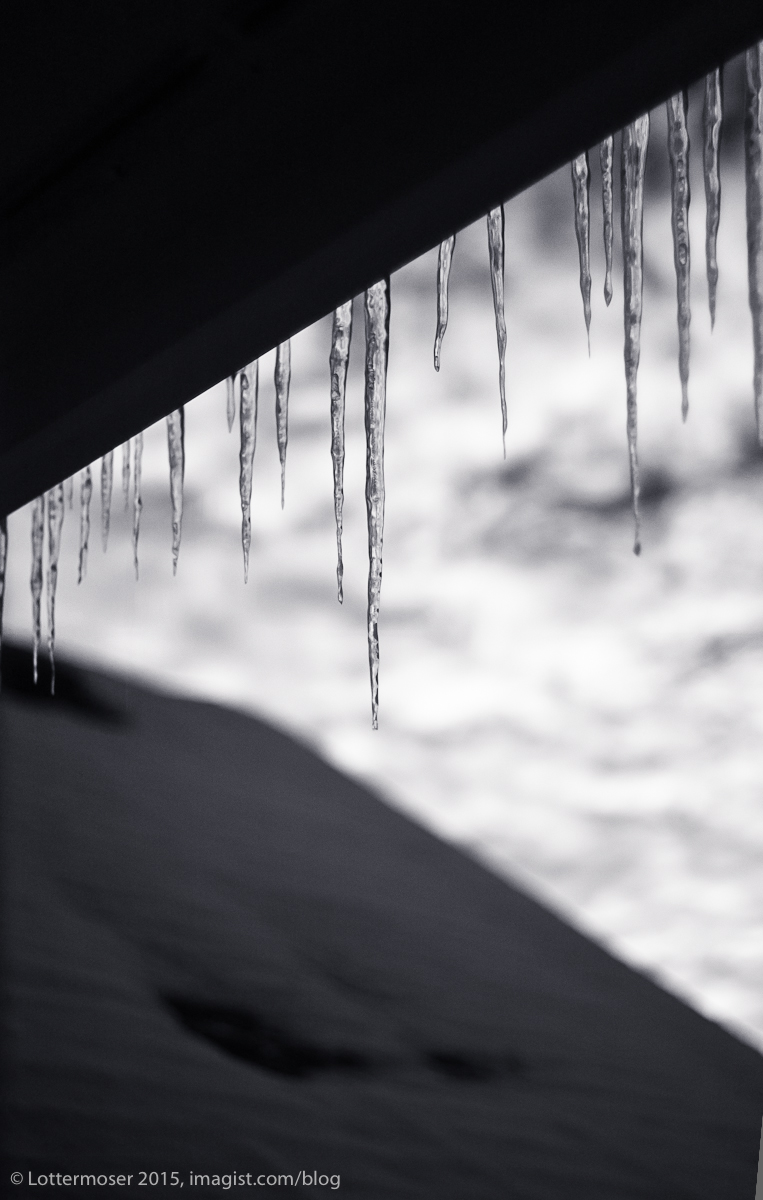
ISO 640 at f:2 and 1/30th of a second
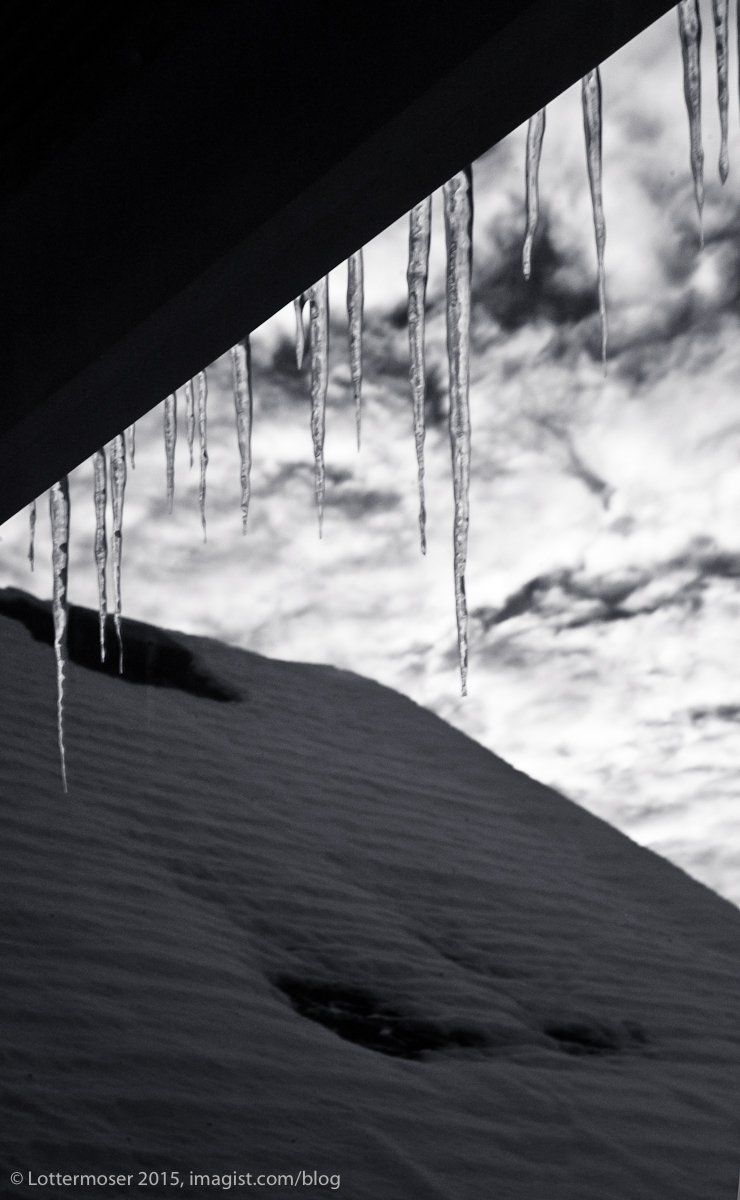
ISO 640 at f:11 and 1 second
Leica M8, 40 mm Summicron, with B+W 093 F-Pro IR Filter

Leica M Monochrom, 50 mm Summilux Asph
while flowing through time and space
floating into winter
a seventieth time
the second time… here
always now… or never
(click photograph for larger view)
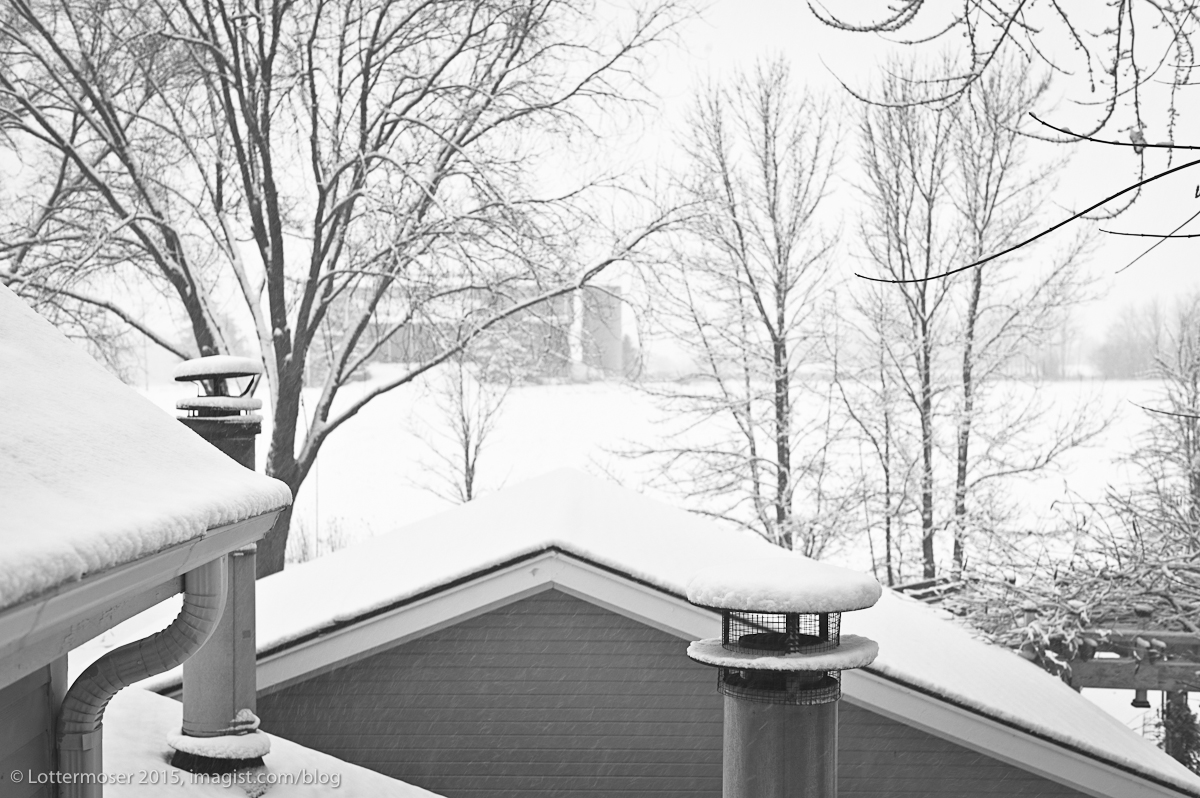
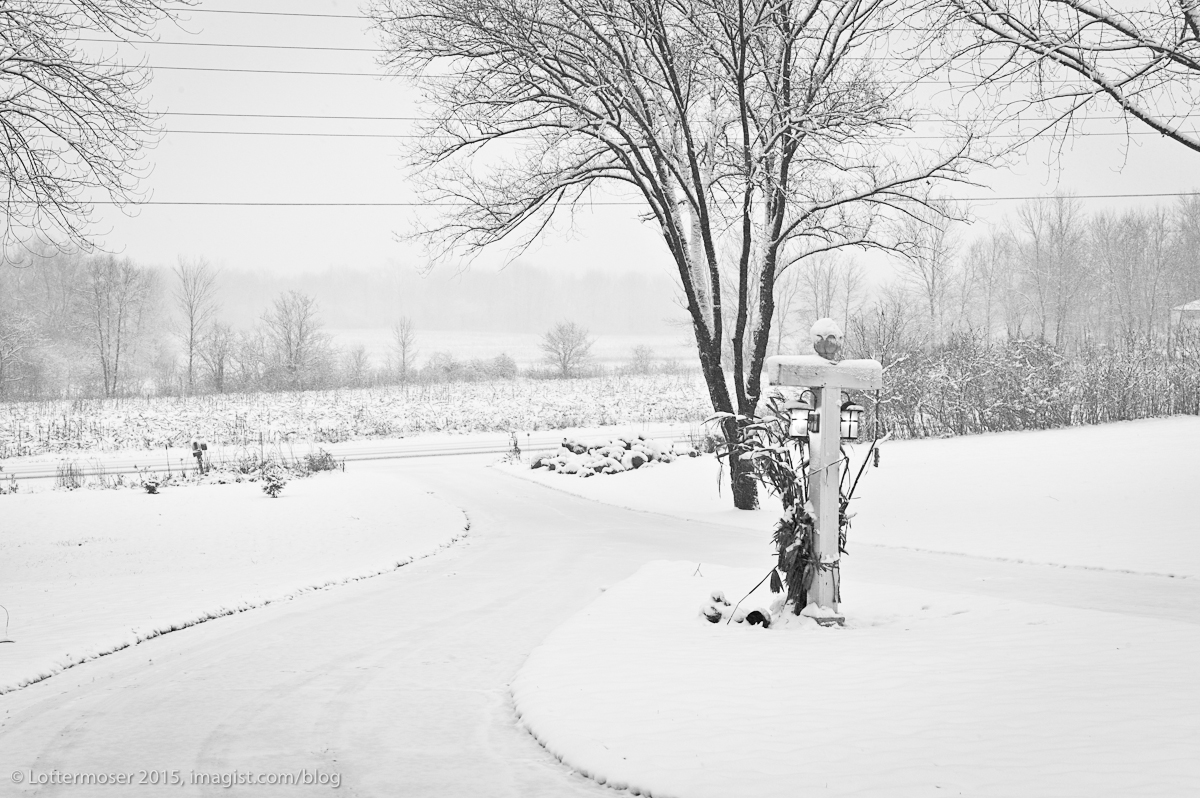
Leica M Monochrom, 50 mm Summilux Asphst
When does our curiosity turn into a serious interest in learning more about people, places or things? or even shift into obsession? We inherit some cast iron pans. We learn how to properly season them. We find cast iron easy to cook with… for virtually anything… for frying… for roasting… for baking… for broiling… we become dependent on our cast iron… we research manufacturers… we learn the history… the markings… the market value… we find rusty 100 year old waffle irons caked with grease and grime… we dip them them in lye… and vinegar… and season them with beeswax… and other secret concoctions… we increase their value 10 fold… but we can’t sell them because we’re addicted to using them… and showing them… and learning more and more… we’re on the hunt for griddles… and Bundt pans… and we let people know that we’d like this or that vintage cake pan from Blaibach, Germany… for our birthday… Well not “we” really… But my daughter, Tanya. If it were me we’d be talking about pens, or lenses, or… well, actually, I really do love my cast iron waffle iron, griddle, and 6″ cast iron frittata pan.
The Cast Iron Bee arrived, from Germany, on my front porch on Monday. On Tuesday morning Tanya came to unwrap the pan. On Sunday she brought me a delicious (yellow, orange scented cinnamon cake with orange, honey, vanilla glaze)… and incredibly gorgeous Bee Cake with actual pollen stuck to its back legs. The cake received 1,400 likes within 4 hours of first posting a photo on Tanya’s international Bundt Cake Facebook page.
(click photographs for larger view)
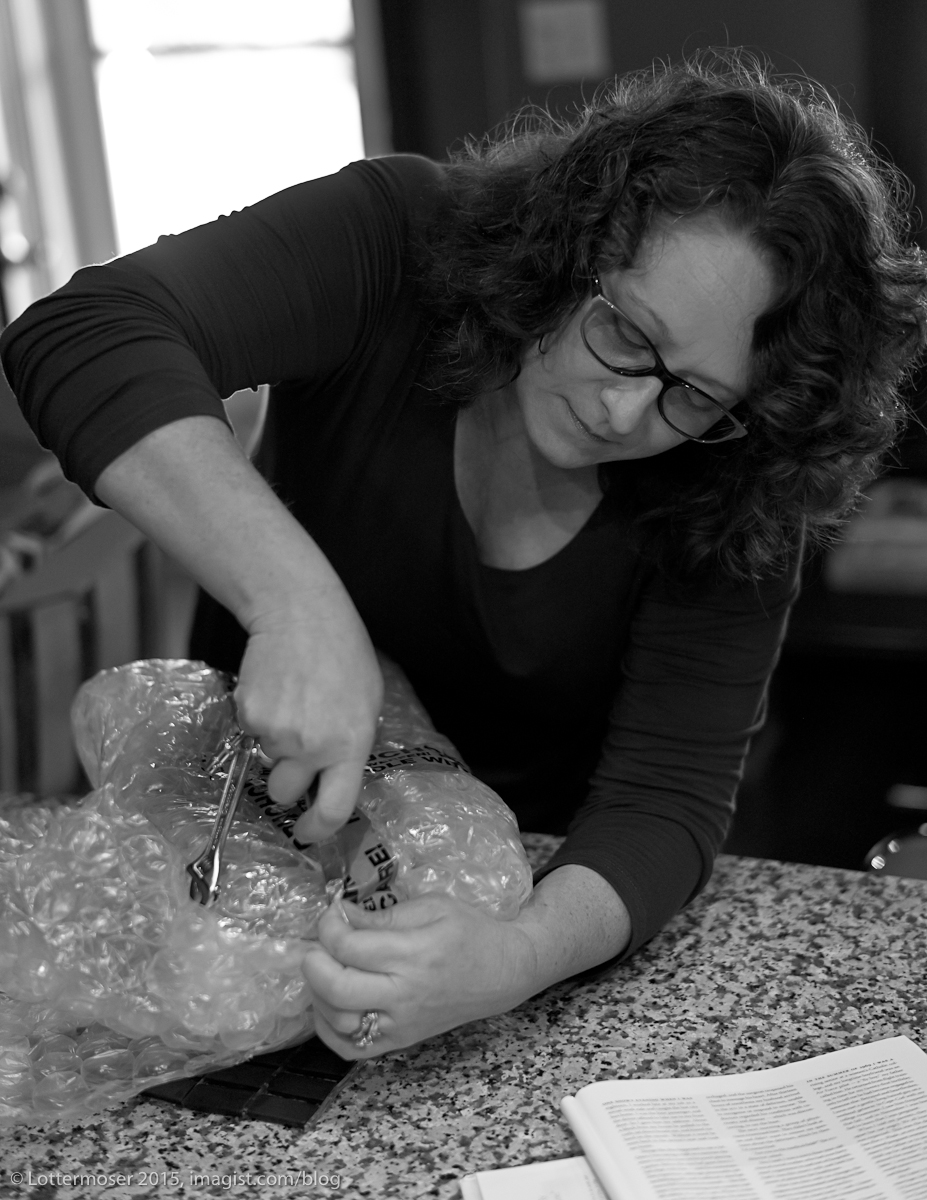
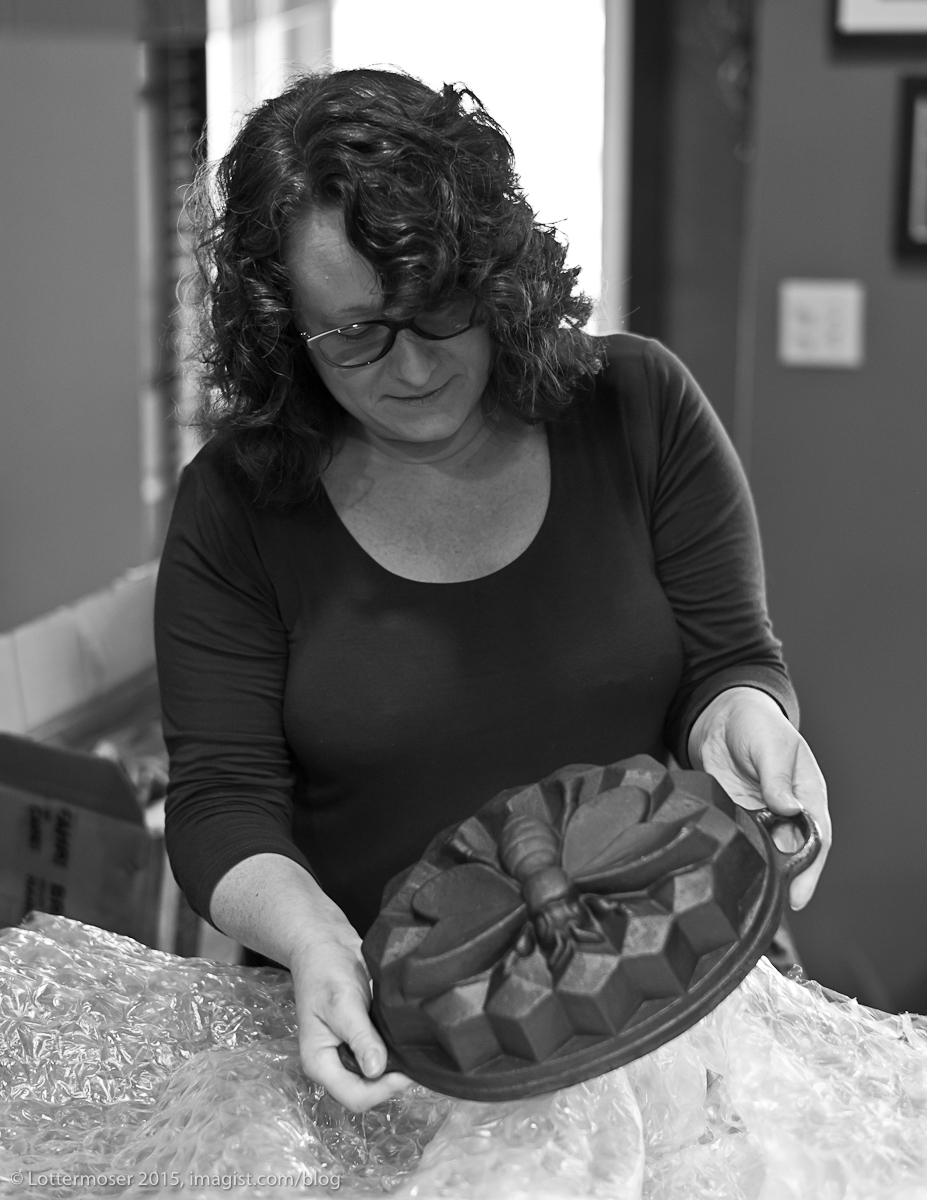
Leica M Monochrom, 50 mm Summilux Asph
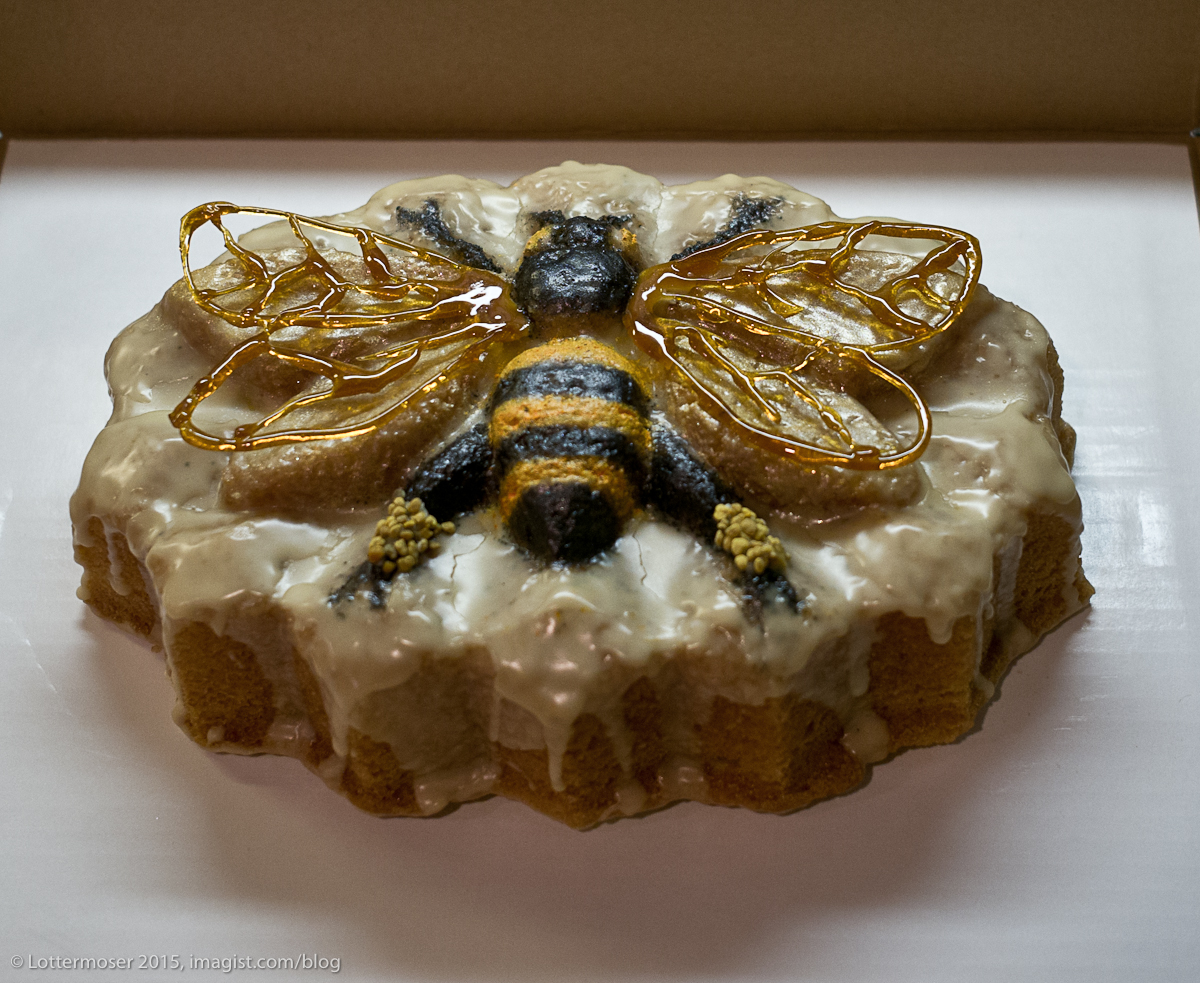
Leica M, 28 mm Summicron Asph
sipping coffee on the front porch.
Thinking about LUGgers who are thinking about Leica R lenses;
and their potential use on the new Leica SL.
(click photograph for larger view)
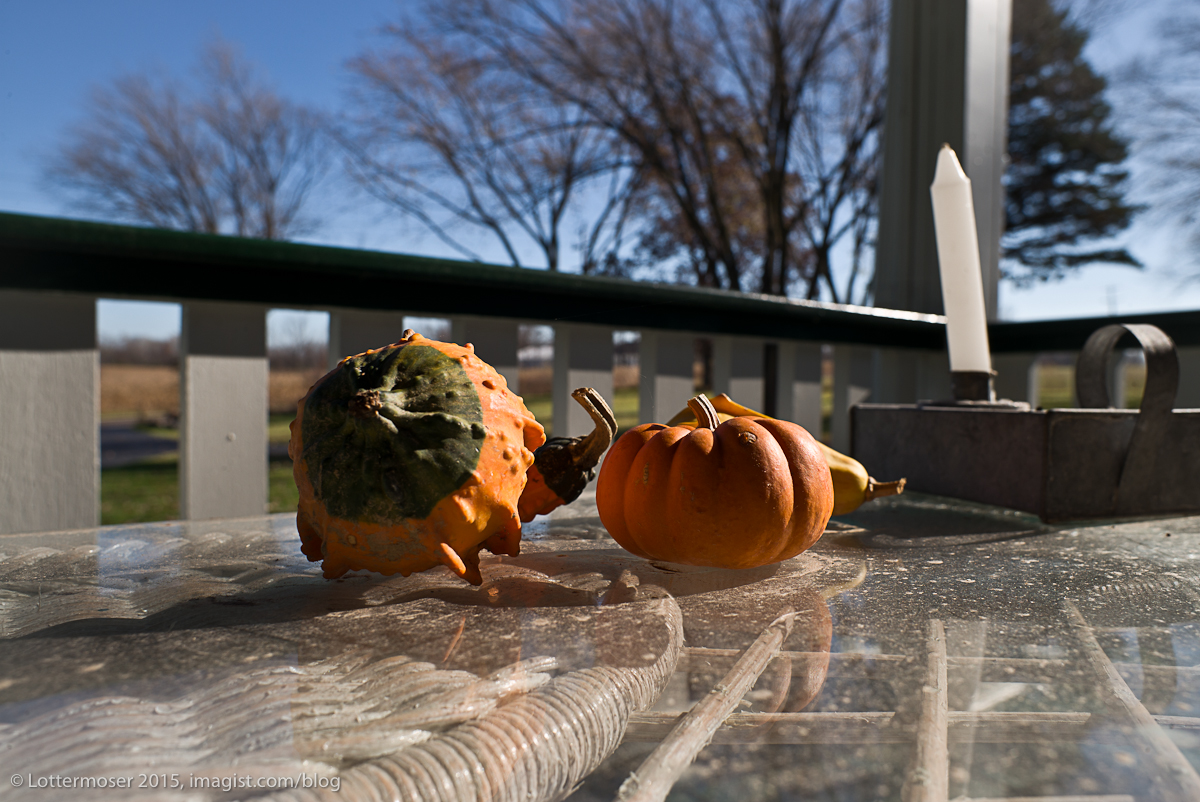
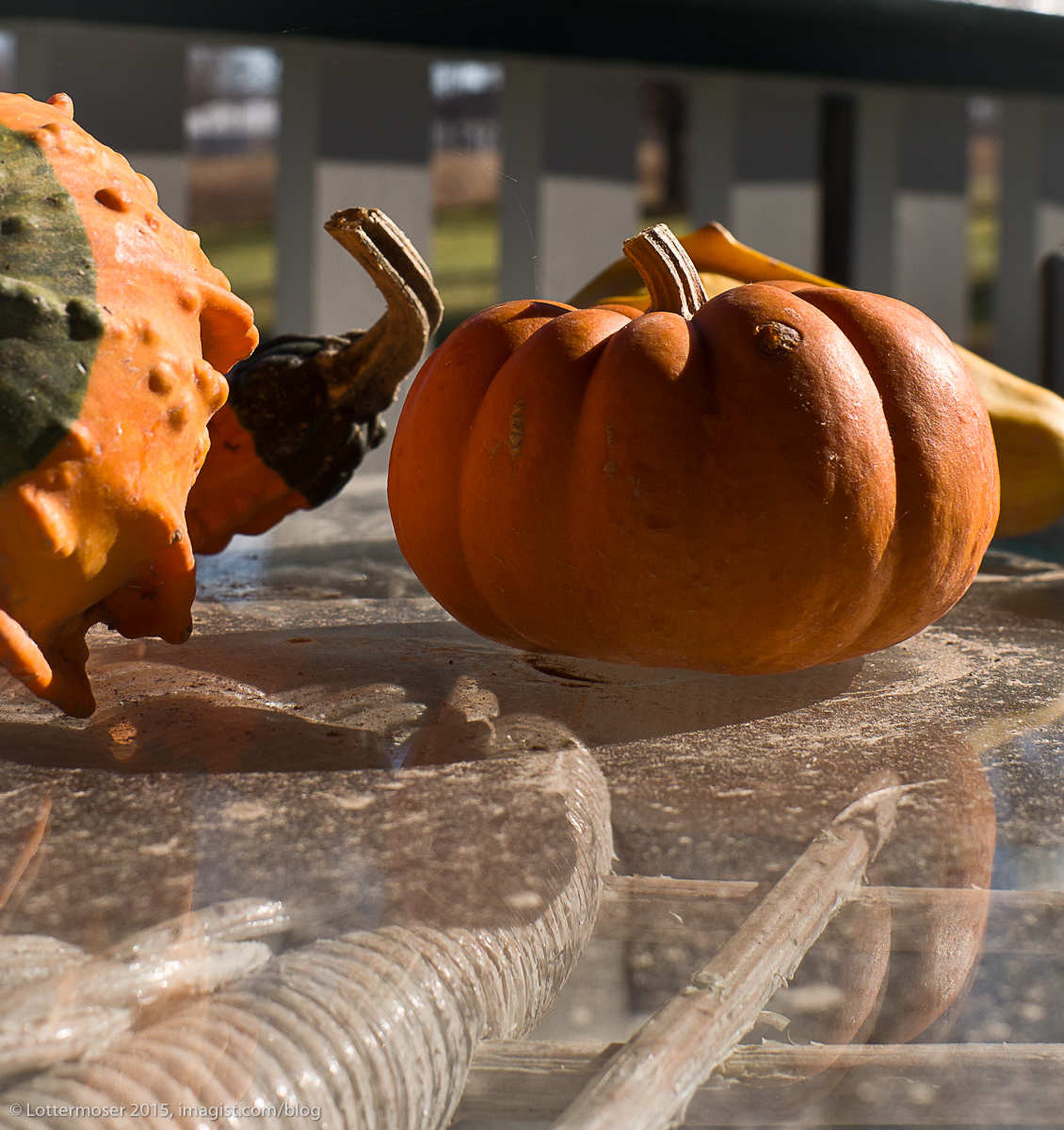
Leica M, 24 mm Elmarit-R